
中山古镇 Zhōngshān Gǔzhèn, Zhongshan Ancient Town, stands on the 笋溪河 Sǔnxī Hé Sunxi River in southern 江津区 Jiāngjīn Qū, Jiangjin District, and it is what a mountain salt port looks like when nothing replaced it: a single raised street of Ming-Qing wooden shop-houses running roughly a kilometre and a half along the river bank, the stilt foundations standing in the waterline gravel, the flagstone lane worn hollow by the porters who carried salt over the ridges. The shops still trade from the old counters – the teahouses, the tobacco baskets, the stone slabs where the town’s ciba rice cakes are griddled – and the river below runs green and cold from the mountains. This page is the street, the river, and the trade that built both.
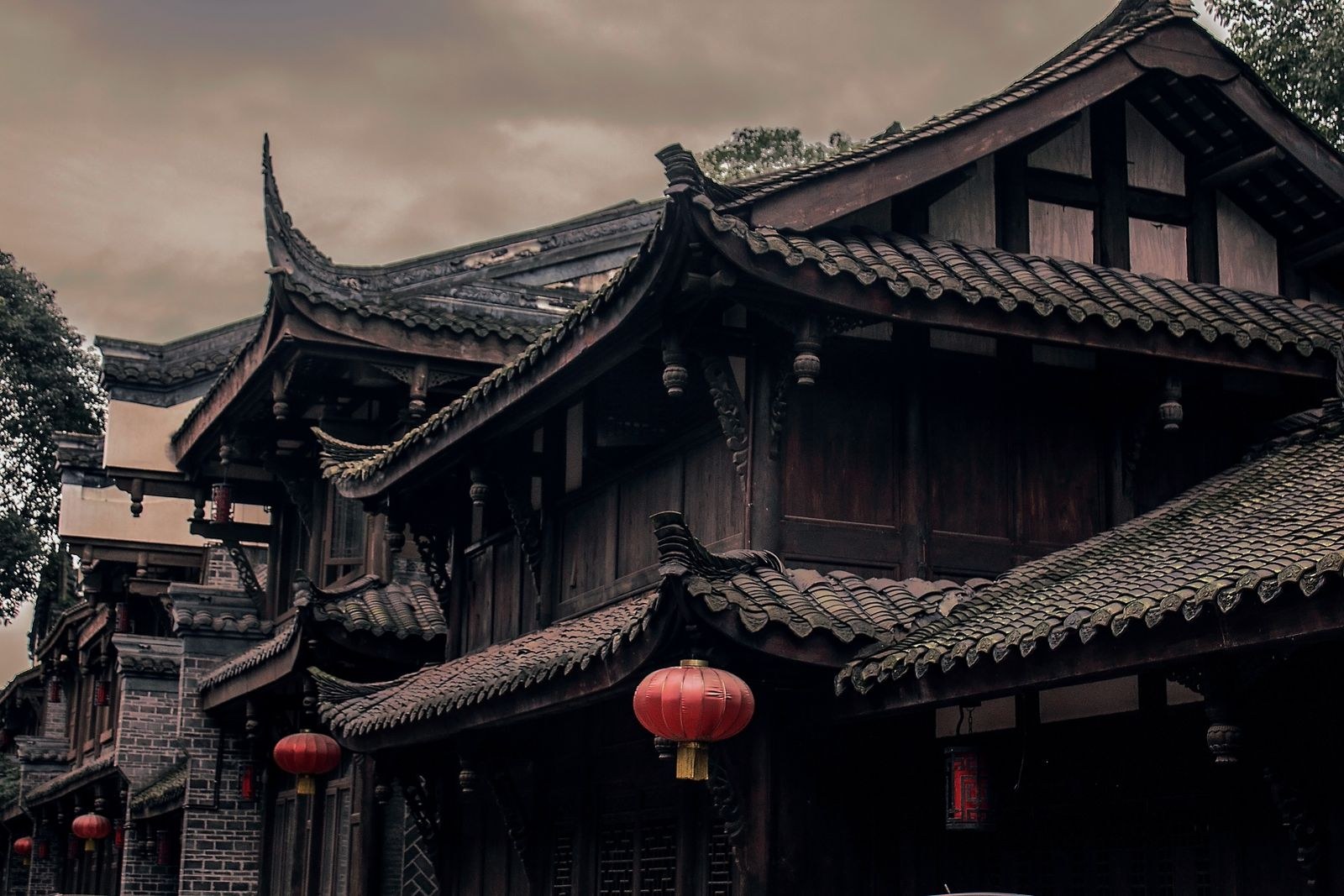
The fabric is the sight, and its rarity is in what did not happen. Old streets usually survive as restorations, and Zhongshan’s street did neither: the timber is the Ming-Qing fabric kept inhabited, the proportions are still the height and width the salt porters knew, and the shops that open in the morning open into the same counters their grandfathers kept. The lane runs between the river and the slope, the back paths climbing among courtyards that predate the street, and the ensemble reads at walking pace: a kilometre and a half is an hour’s stroll if a visitor does not stop, and half a day if the visitor does what the street is for, which is sit, drink tea, and watch the water.
The salt trade is the reason the street exists and the key to reading it. The Sunxi drains the southern mountains, the salt routes crossed the ridges above it, and this bank was where the loads changed hands – porters up, goods down, and a service street growing along the landing to feed and bed them. The stone slabs of the snack stalls are the trade’s living relics: the town’s ciba, griddled hot on heated stone, was the porter’s food, cheap calories for the climb, and the lanes still smell of scorched rice in the morning. The teahouses keep the same logic, and the tobacco baskets are museum pieces that never went into a museum. Nothing on the street explains itself loudly, which is why the page does.
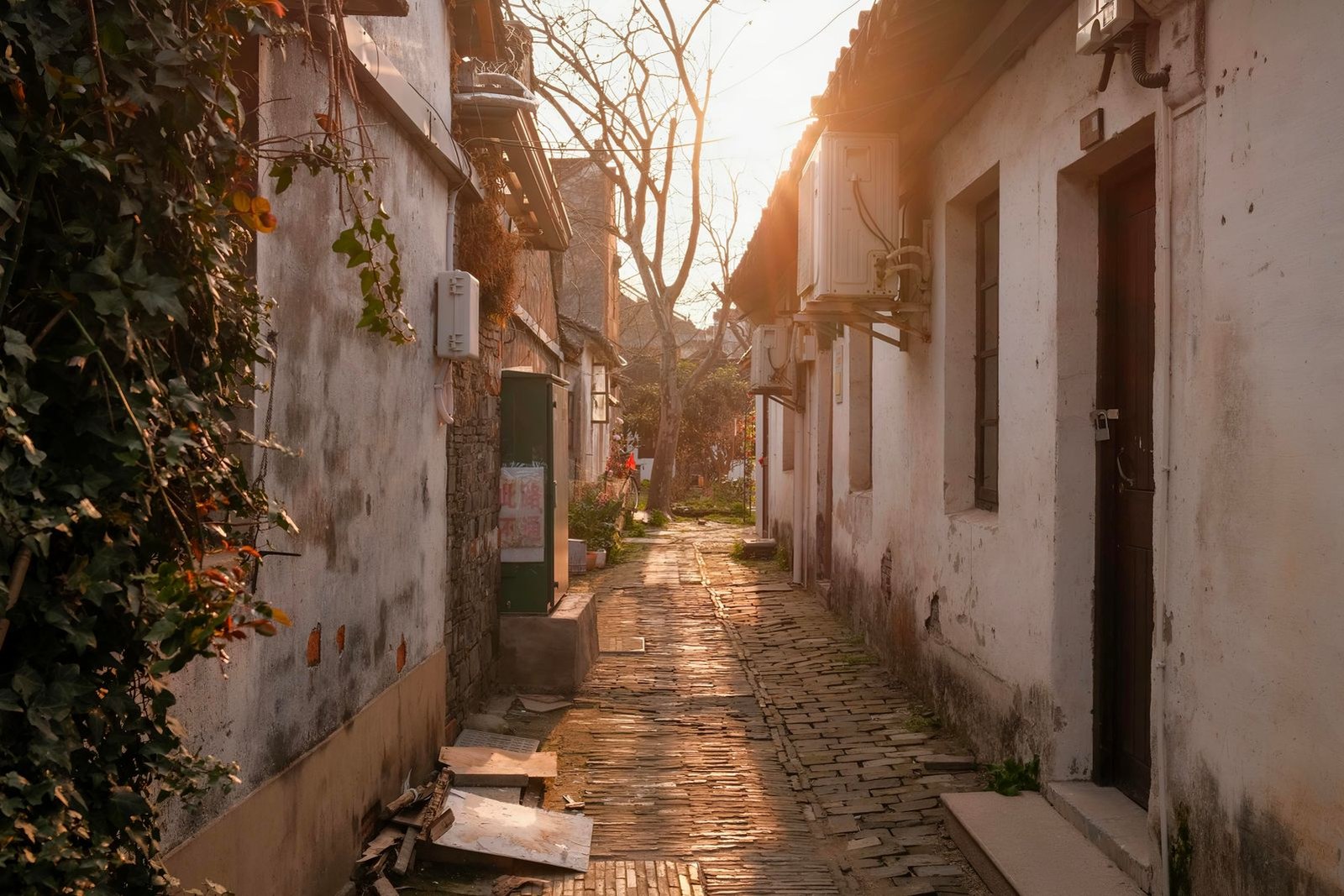
The river is the street’s other face. The Sunxi runs waterfall-fed and cold, quick over gravel shoals and deep in the green pools below the town, and the fishermen’s rafts work the pools the way they always did – cormorants in the colder months, nets in the warm ones. Morning mist stands on the water before the sun clears the ridge – the photograph the town is known for and the reason the veranda rooms fill – and the night sound, guests say, is the river stones moving. The lodging trade has its own page in the stay column, and it converts the half-day visit into the district’s easiest overnight.
What the record supports is the town, the river, the kilometre-and-a-half street of Ming-Qing shop-houses on stilt foundations, the salt-road function, the ciba stone slabs, the teahouses and the fishermen’s rafts; what it does not support is any ticket figure, any founding date worth quoting, or any claim of originality down to the individual beam, and none is invented here. The town charges little and pretends nothing: a salt-road street kept inhabited, still trading, still smelling of scorched rice at nine in the morning.
Words and Names
中山古镇 Zhōngshān Gǔzhèn, Zhongshan Ancient Town, on the 笋溪河 Sǔnxī Hé Sunxi River in southern 江津区 Jiāngjīn Qū, Jiangjin District: a raised street of Ming-Qing wooden shop-houses roughly a kilometre and a half long, standing on stilt foundations at the river’s gravel line, worn hollow by the salt porters who crossed the ridges above. The shops keep the old counters – teahouses, tobacco baskets, and the heated stone slabs on which the town’s 石板糍粑 shíbǎn cībā stone-slab rice cakes are griddled – and the cold green river below still carries the fishermen’s rafts and their cormorants. No ticket figure, founding date or beam-by-beam originality claim is on the record consulted, and none is invented here.
What the Locals Know
The local knowledge is the mist and the menu. The town photographs before breakfast – mist on the river, smoke from the kitchen fires, the street empty – and the veranda-room guests see it from bed; day visitors who want the same picture stay the night before. The ciba stalls run hottest in the morning, the teahouses fill after, and the afternoon is for the courtyards above the street. Weekends bring the Chongqing day-trippers; the local’s trick is to arrive Friday evening and have Saturday morning to themselves. What the record does not carry is any stall-by-stall recommendation, and the page declines one – the street walks in an hour, and the nose finds the rice cakes.
Practicalities
Tickets: None – the old street is free public ground, lived in and traded on, and no gate, ticket or lane charge is on the record consulted. The costs along the street are the ordinary ones of eating and drinking on it – the ciba off the hot stone slab, the teahouse seat, the room over the water – and the page leaves those to the menu rather than quoting a figure it does not have.
Opening hours: The street itself never shuts – it is the town’s own footpath – and the trade runs the daylight: ciba stalls hottest through the morning, teahouses and shops through the afternoon, the riverside inns taking over after dark. No posted hours table is on the record consulted; the honest clock is the mist and the menu, morning for the photographs and the street’s best hour, evening for the veranda.
Closing day: None – a street that is also somebody’s home street does not close on a weekday, and no published rest day is on the record consulted. The river sets the only calendar the town respects: flood water can climb the stilt foundations’ doorstep and move the rafts, which is a river event rather than a closing one, and the town resumes the way it always has.
Getting there: The town is on the 笋溪河 Sǔnxī Hé Sunxi River in southern 江津区 Jiāngjīn Qū, Jiangjin District – reached by road from the district seat, or down from the Simian Mountains road on the same southern loop, with district buses working the route; no timetable or fare is on the record consulted, so none is invented here, and the self-drive over that southern loop is the honest recommendation.
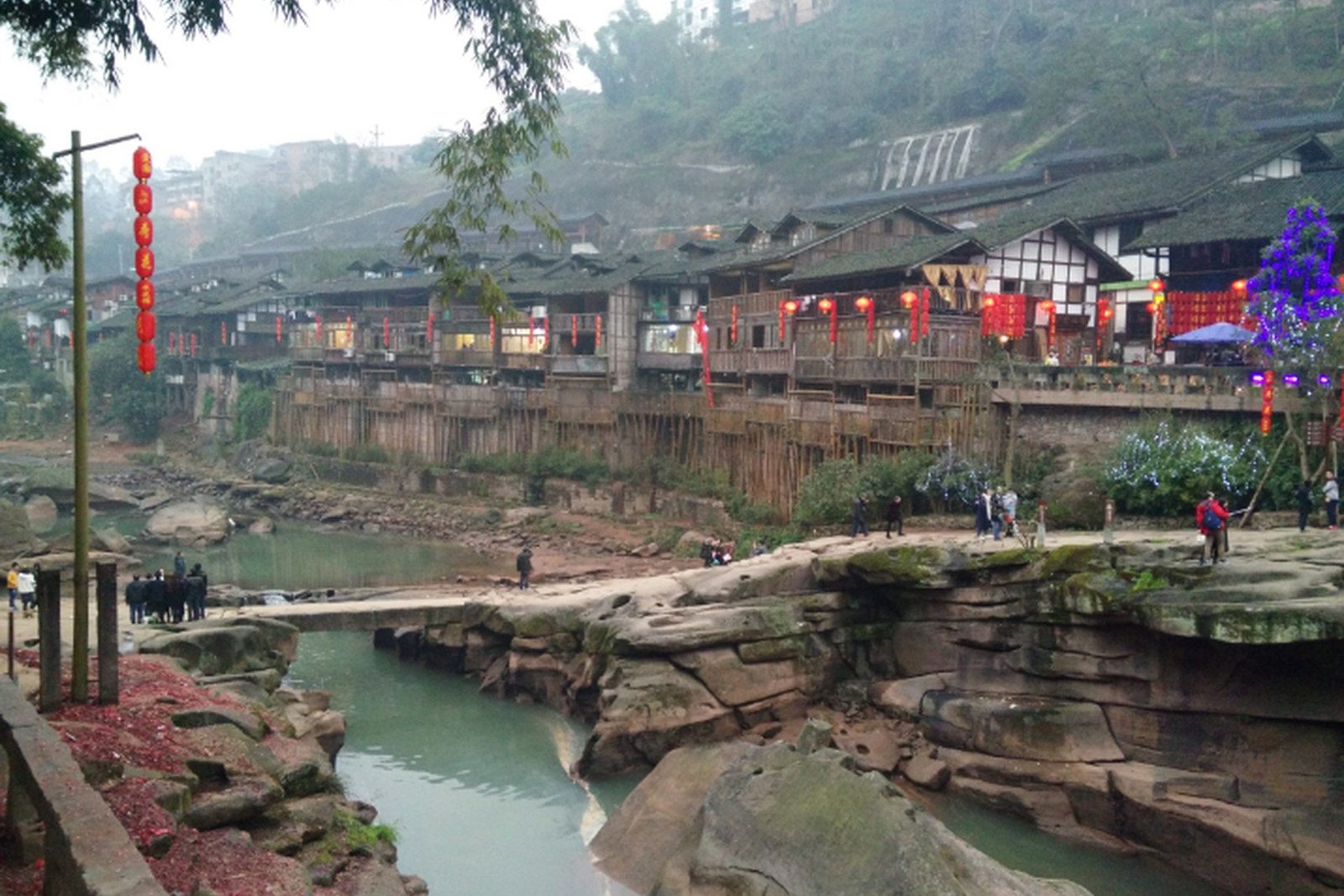
flowcloud would say that Zhongshan Ancient Town is the district’s best half-day – a kilometre and a half of inhabited Ming-Qing shop-houses on stilts along the 笋溪河 Sunxi River, the salt-porters’ street still trading from its old counters, ciba griddled on hot stone in the mornings and fishing rafts working the green pools below – and that the correct visit is Friday evening into a misty Saturday morning from a veranda room over the water, because the street’s best hour belongs to the guests of its inns. All checked October 2026.