
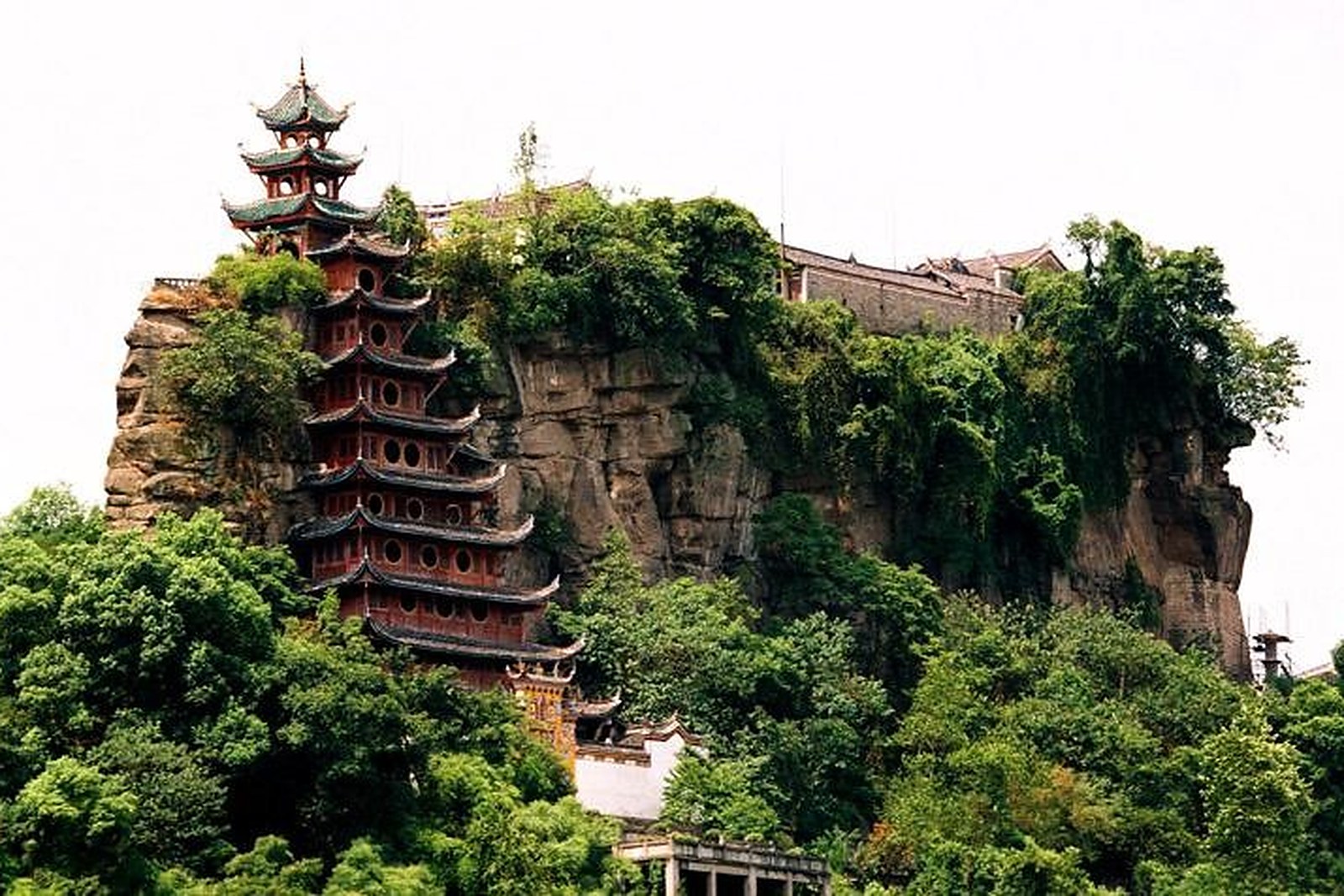
Shibaozhai (石宝寨) rises from the north bank of the Yangtze in Zhongxian County as a twelve-story wooden tower pressed flat against a sheer cliff — a structure so improbable that locals call it a “bonsai in the river” (江中盆景) and a “pearl on the Yangtze” (江上明珠). The crag it clings to is Yùyìn Mountain (玉印山), the Jade Seal Mountain, a solitary limestone spire that stands alone among the terraced fields and climbs almost straight up from the waterline. To ascend it is to follow a staircase that the builders wedged into the rock more than three centuries ago, and the tower itself was raised without a single iron nail — every joint held by mortise and tenon, by timber locked into timber, by the patient logic of carpenters who trusted the grain of the wood over any metal.
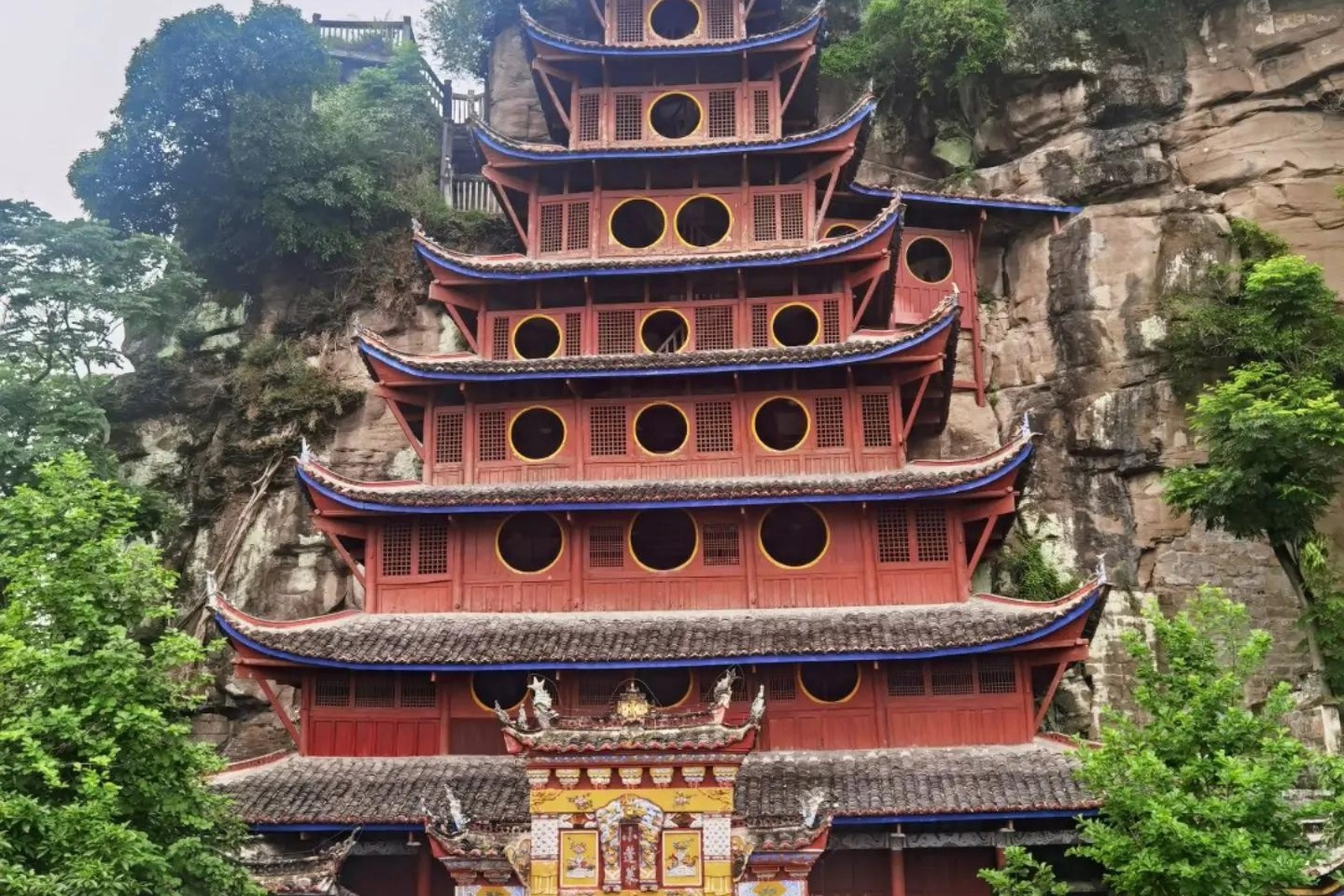
At the foot of the crag sits the Hall of the Pure Sound (清音阁), and from there the climb winds upward through the pavilions that stack one above another, each level opening onto a different framed view of the river. The top of the ascent reaches a small temple set into the rock, where the cliff falls away on every side and the Yangtze spreads out below in a long, slow bend. On a clear morning the water is the colour of pale jade; in the haze of the wet season the tower seems to float, its tiers dissolving into the mist that drifts up from the gorge, and the far shore softens to a watercolour of grey-green hills.
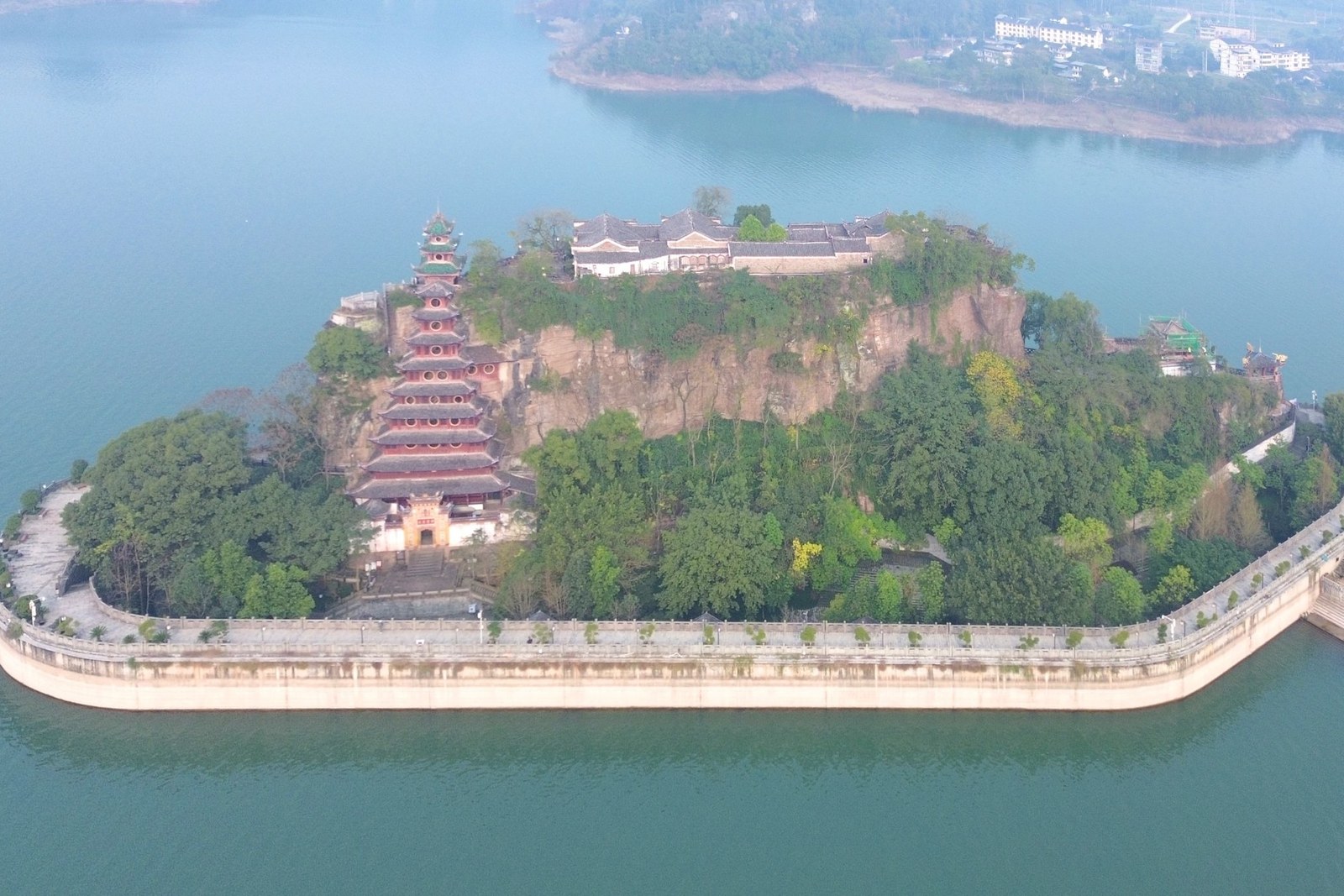
When the Three Gorges Dam raised the reservoir level, the foot of the mountain slipped under the surface and Shibaozhai became an island. To keep the tower from the rising water, engineers threw an enclosing dyke (围堤) of concrete and rock around the base — a low ring that holds the Yangtze at bay and lets visitors cross to the crag by a short causeway. Inside, the wood still smells of pine resin and old lacquer, and the light comes down the stairwell in narrow slants that move a little with the hour. The silence up there is oddly complete; only the remote whistle of a ferry or the flap of a river bird breaks it. It is a place built to be admired from the water, and yet the real reward is in the climbing — in the slow realisation that a building this fragile has outlasted dynasties by simply refusing to come apart. Admission is typically around a modest fee, and the climb itself takes the better part of an hour if you pause at each tier.
Words and Names
石宝寨 Shíbǎozhài — the cliffside wooden fortress tower of Zhongxian 玉印山 Yùyìnshān — Jade Seal Mountain, the solitary crag the tower clings to 江中盆景 jiāngzhōng pénjǐng — “a bonsai in the river”, a local nickname for Shibaozhai 寨楼 zhàilóu — the nail-less wooden tower built by mortise and tenon 围堤 wéidī — the enclosing dyke that protects the site from the reservoir