
中原镇 Zhōng yuán zhèn is a small town in the interior of 琼海市 Qiónghǎi shì, fifteen kilometres south-east of 嘉积 Jiā jī, and its streets were paid for from abroad. The county has been a source of emigrants for a century and a half, and 中原 alone counts close to sixty thousand of its people living in Southeast Asia, Hong Kong, Macao and 中国台湾 – twice the number who live in the town, which has a resident population of about thirty thousand across twenty-two villages and a hundred and twelve square kilometres. The money they sent home built the shophouses, the money they sent home brought back the recipes, and what the town has now done is put a name on it: the 南洋风情小镇 Nán yáng fēng qíng xiǎo zhèn, the Nanyang style town, whose slogan is 风情万种、独念中原, a thousand kinds of charm and only one Zhongyuan.
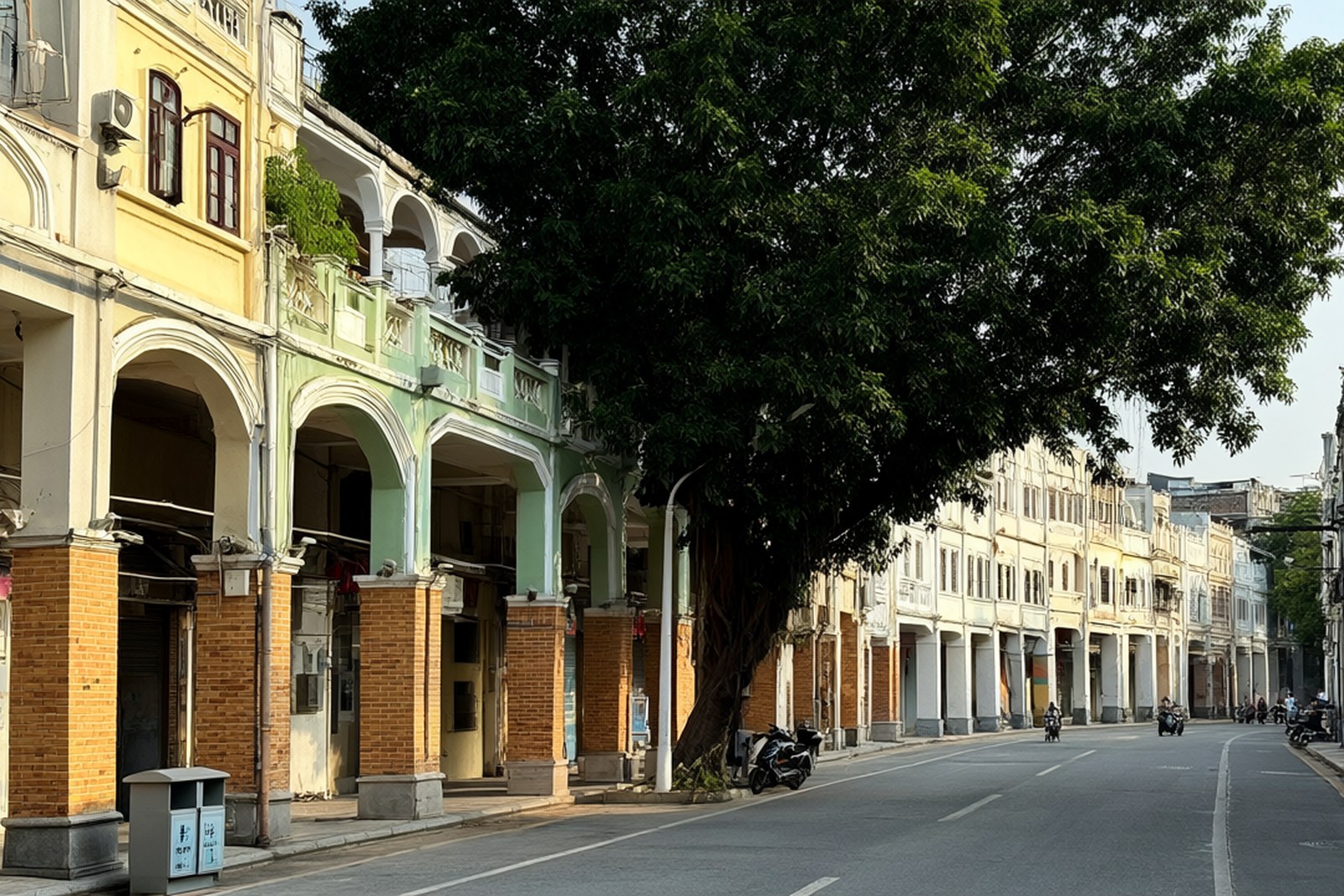
The buildings are the first half of the argument. 南洋 Nán yáng, the Southern Ocean, is what the island has always called Southeast Asia, and the 骑楼 qí lóu here are the same arcaded shophouses as at 海口 and 文昌, painted in the strong colours a southern Chinese trading town liked – ochre, jade, cream – with a run of identical roof lines, carved columns on the street edge, shuttered windows and old-fashioned lamps. What makes 中原 different from the others is the canopy. The trees over the main street are 雨树 yǔ shù, rain trees, brought back from Southeast Asia by returned emigrants and planted along the road, and fifty or sixty years later they have closed over it with canopies wide enough to put the whole street into deep shade at midday, so that walking through town is like walking through a tunnel of leaves with coloured facades on either side.
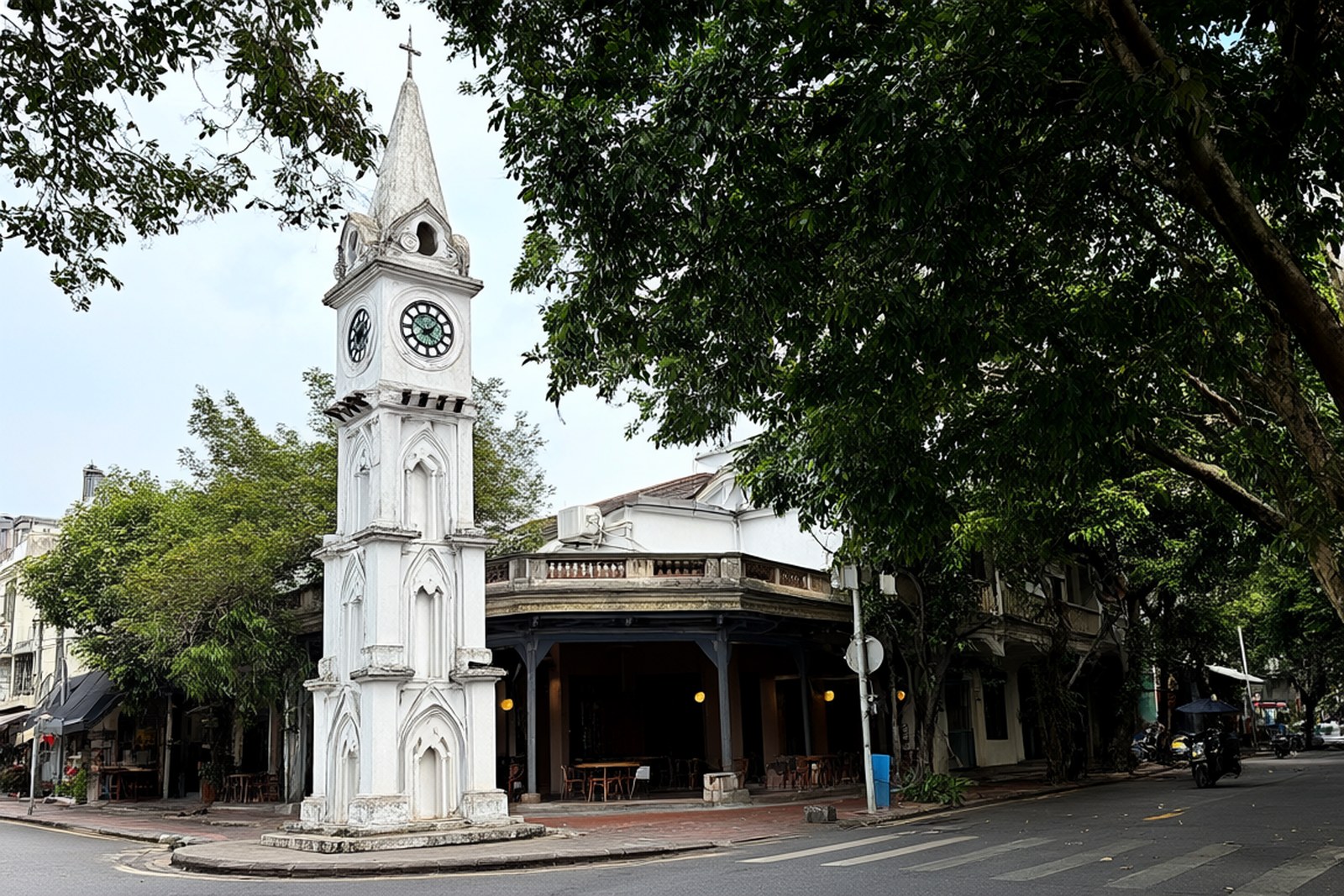
The second half of the argument is in a small carved white 中原南洋钟楼 Zhōng yuán Nán yáng zhōng lóu, the Nanyang clock tower, and in the 老南洋咖啡馆 Lǎo Nán yáng kā fēi guǎn, the old Nanyang coffee house, on one of the corners, which is doing exactly what the returned families did when they came back – serving the coffee and the toast of the places they had been. The county’s own reading of how the emigration happened puts the harbour into the story: the men who went abroad, the 南洋客 Nán yáng kè, mostly sailed as passengers on the same 潭门 Tán mén boats that were working the 南沙 Nán shā, and the routes in the captains’ hand-written 更路簿 gēng lù bù record the passages on to Vietnam, Thailand, Malaysia and Singapore. The coffee house and the museum at 潭门 are two ends of one migration, and it is worth doing both. The town was named one of the country’s characteristic tourism landscape towns in 2015, and it is at its best at the 清明 and the Spring Festival, when the families come back and the streets fill.
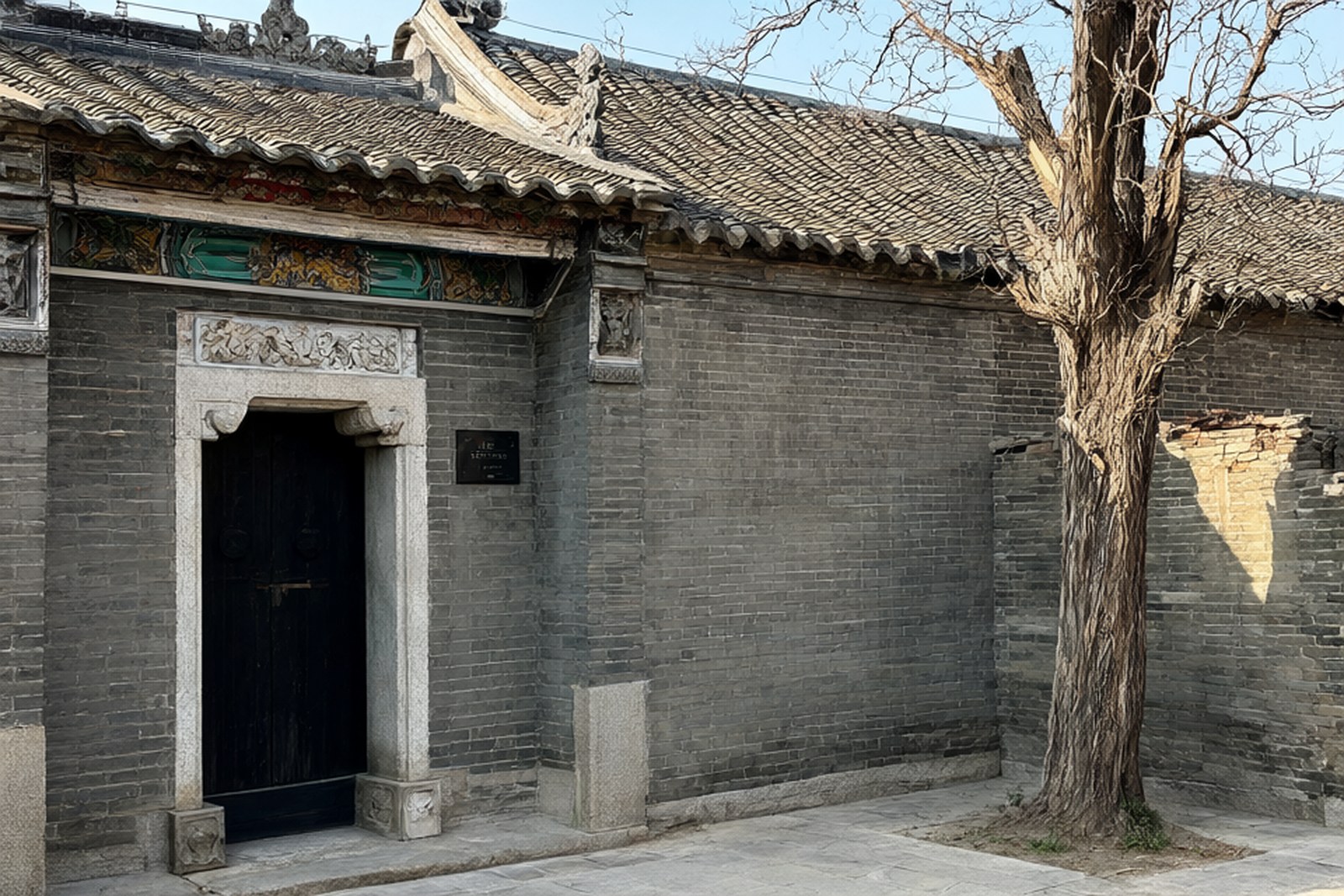
Around the town the country is working farmland and worth half a day in its own right. The same emigrant money that built the shophouses went into 槟榔 bīng láng, betel palm, and 橡胶 xiàng jiāo, rubber, with 胡椒 hú jiāo, pepper, behind them, and the town’s own figures give the scale: eighteen thousand eight hundred mu of betel, fourteen thousand three hundred of rubber, seven thousand one hundred of pepper, twenty thousand of paddy, eighteen thousand five hundred of vegetables and twenty-one thousand eight hundred of tropical fruit, including 菠萝, 荔枝 and 番石榴. The villages between 中原 and 博鳌, 南强村 Nán qiáng cūn, 沙美村 Shā měi cūn and 留客村 Liú kè cūn, are the ones the county has kept and improved rather than rebuilt, and 留客’s 蔡家宅 Cài jiā zhái, the courtyard house an emigrant family came home to, is the best of them.
Practicalities
Tickets. The 骑楼 streets, the trees, the clock tower and the villages are free and there is nothing to pay anywhere in the town. The coffee house and the small restaurants charge normally, and the villages are working places rather than ticketed sites.
Opening hours. The streets are open all day and the shade makes them usable from about nine in the morning, which is not true of anywhere else in the county. The coffee house and the shops keep roughly 08:00 to 21:00 and the restaurants close earlier than in 嘉积. Two to three hours covers the town and a half day covers the town and two or three of the villages.
Getting there. 中原镇 is about fifteen kilometres south-east of 嘉积镇, on the road between the county town and 博鳌. 博鳌站 Bó’áo zhàn on the 东环 high-speed line is about ten minutes away by road and is the nearest station, and 琼海站 Qiónghǎi zhàn is about thirty minutes; 琼海博鳌机场 Qiónghǎi Bó’áo jī chǎng is about twenty minutes. A car or a taxi is needed for the villages, and the town itself is small enough to walk in twenty minutes.
Closing day. There is no closing day. The streets, the clock tower and the villages are open every day of the year, and the quietest time to see the buildings is an ordinary weekday. The town is at its fullest at the Lunar New Year and at the 清明, when the emigrant families come back and the streets are decorated, which is the best time to see what the place is actually for.
flowcloud would say that a town whose residents are outnumbered two to one by the people who left, and which has spent its money on shade trees, a clock tower and a coffee house rather than on a monument, has decided that the honest way to remember an emigration is to keep living where it started.
Getting there: 中原镇 is in 琼海市, about fifteen kilometres south-east of 嘉积镇 on the road to 博鳌, with 博鳌站 Bó’áo zhàn on the 东环 high-speed line about ten minutes away by road and 琼海博鳌机场 about twenty minutes; the shophouse street and the clock tower are within a twenty-minute walk of each other.