
珠玑巷 Zhū jī xiàng and the 梅关古道 Méi guān gǔ dào are one subject seen from two ends: a lane in 南雄市 Nán xióng shì that is the address a great many families in the 珠江 Zhū jiāng delta and overseas still name as their origin, and the flagged road over the 梅岭 Méi lǐng pass that made the lane worth living in. The lane is in 珠玑镇 zhū jī zhèn, about twenty kilometres from 南雄’s city centre; the pass is on the ridge above it, thirty-odd kilometres out of town, on the boundary between 广东 Guǎng dōng and 江西 Jiāng xī. 梅岭 Méi lǐng is also called 大庾岭 Dà yǔ lǐng and is one section of the 五岭 Wǔ lǐng – the five ranges of the 南岭 Nán lǐng – standing at 746 metres and described in the histories as 居五岭之首,为江广之冲 jū wǔ lǐng zhī shǒu, wéi jiāng guǎng zhī chōng, first among the five ranges and the crossing point between Jiangxi and Guangdong. Ten kilometres from 大余 Dà yú county town on the Jiangxi side, twenty from 南雄 on the Guangdong side, it is the natural doorway between the 长江 Cháng jiāng and 珠江 Zhū jiāng drainage systems, and it has been used as one since the Qin and Han, more than 2,200 years. In 214 BC the Qin general 赵佗 Zhào Tuó marched through the pass into Guangdong and set a barrier at the head of the defile called 横浦关 héng pǔ guān, also known as 秦关 Qín guān, the Qin pass, which is the earliest fortification on the site.
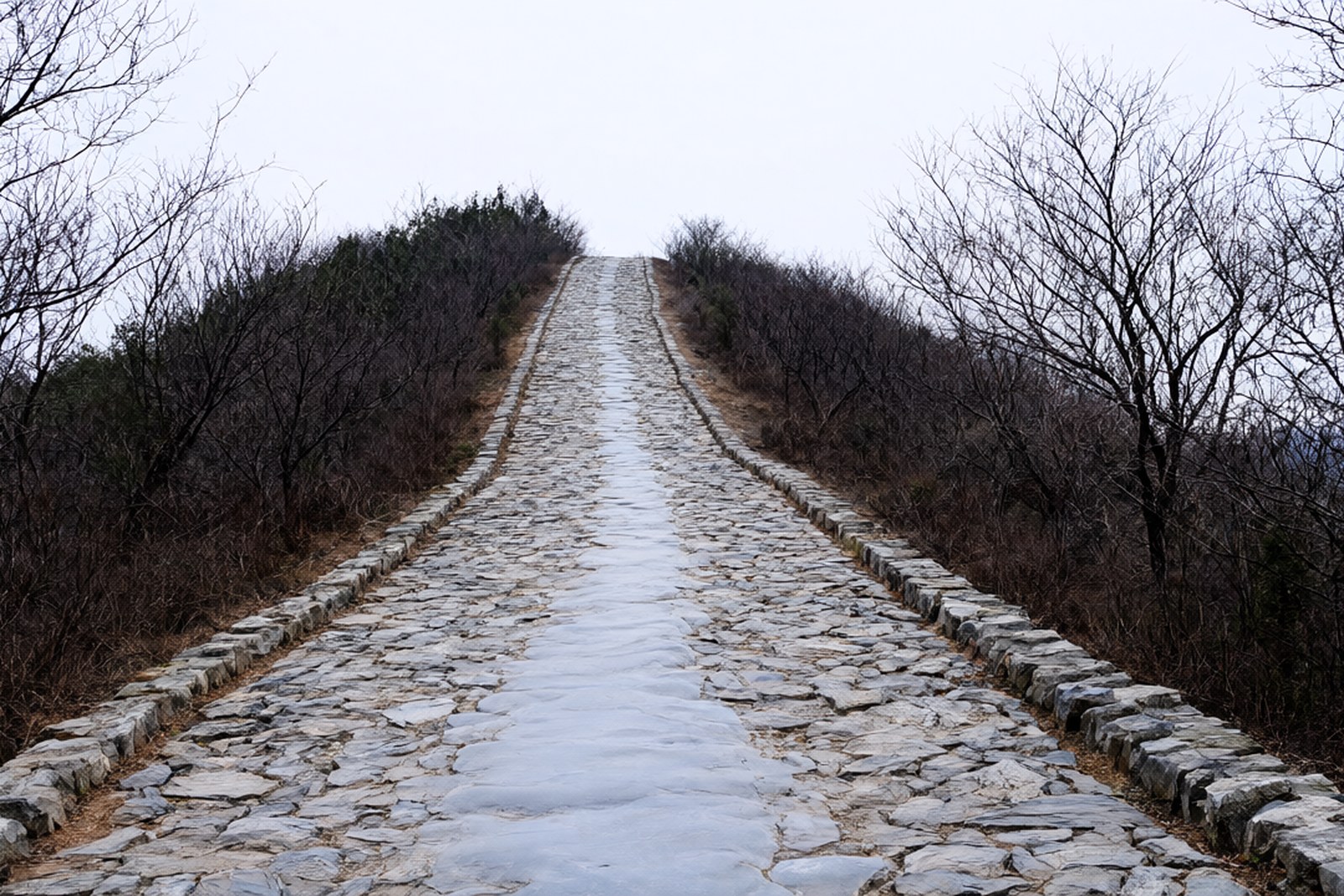
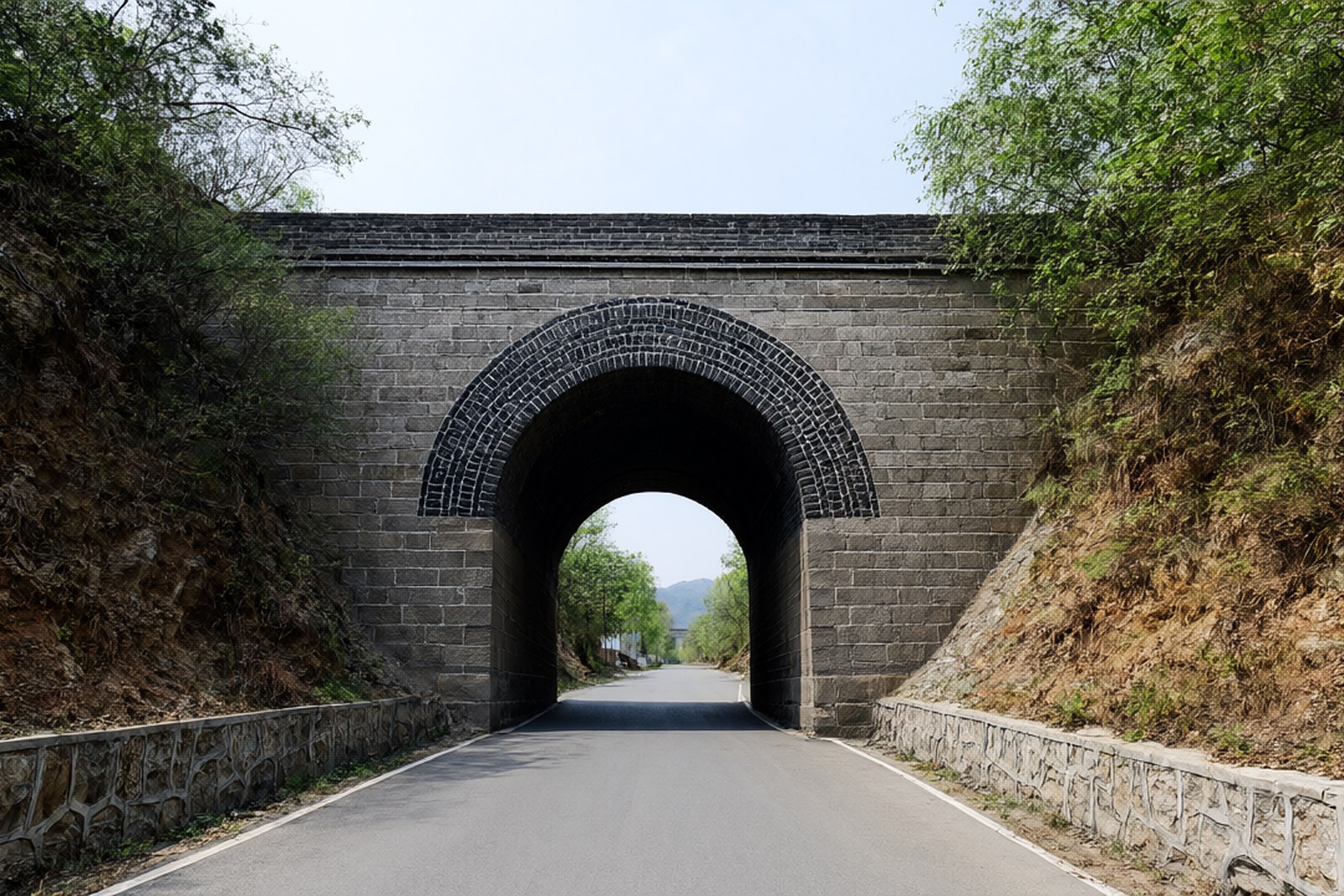
The road that survives is the work of one man, and the story the county tells about why he did it is the sort of thing that keeps a place in the guidebooks. In the fourth year of 开元 Kāi yuán of the Tang, 716, the court official 张九龄 Zhāng Jiǔ líng – a native of 曲江 Qū jiāng in what is now 韶关 – was ordered to widen and rebuild the old track over the ridge, and it took two years of heavy work. The account given locally is that as a young man travelling down from 粤北 Yuè běi to sit the imperial examinations in the capital, he had come over 梅岭 himself and seen how narrow and steep the path was, with goods carried entirely on men’s backs and shoulders along the 人苦峻极 rén kǔ jùn jí – the place where people suffer at the limit of steepness – and had stood in front of an old plum grove beside the road and made a vow: if I ever get where I am going, I will turn this obstacle into a thoroughfare. Whether or not the vow is history, the road is: 张九龄 came back as a minister, memorialised the throne, got his approval, and cut the pass into a proper highway, and it is the reason his name is on the site rather than a prefect’s. The pass gate on the ridge is later than the road and is dated to the eighth year of 嘉祐 Jiā yòu in the Northern 宋 Sòng, 1063, a structure the local language describes with the phrase 一夫当关,万夫莫开 yī fū dāng guān, wàn fū mò kāi – one man holding the gate and ten thousand cannot force it – and its south door once carried a couplet that is now weathered past reading: 梅止行人渴,关防暴客来 méi zhǐ xíng rén kě, guān fáng bào kè lái, plums for the traveller’s thirst, and the pass against the robber’s arrival.
The length of this road is a good example of why numbers need sources, because five different totals circulate and they are all describing different things. After 张九龄 opened it the road is given at about 40 kilometres from 大余 in the north to 南雄 in the south, and a second account puts it at 20 kilometres, or 2,000 丈; of that historic whole, the best-preserved surviving stretch is about 2,300 metres, and within that stretch the section from 来雁亭 Lái yàn tíng to the pass gate is about 1,015 metres, with sources on the Jiangxi side giving their own surviving length as 1,874 metres. The safe way to hold all of that is in one sentence: the road was about 40 kilometres when it was cut, the best-preserved run still walkable is roughly 2.3 kilometres, and the 1,015 metres from 来雁亭 up to the gate is the part most visitors mean when they say they walked 梅关古道. The surface is the reason for its reputation. It is paved throughout in 青石 qīng shí and river cobbles, split stone set by hand into a camber, which is what has kept it walkable for thirteen centuries and what Guangdong’s own write-ups mean when they call it the best-preserved surviving post road in the country. The width is given as two to four metres, with other accounts at about six 尺 or a 丈 and a half. What it carried was the whole of the south’s trade for centuries. This was the shortest land crossing between the Yangtze and Pearl River systems – forty kilometres of hill road with water at both ends – and it has been called the overland landmark of the 海上丝绸之路 hǎi shàng sī chóu zhī lù, the maritime silk road. The transport historian 张星烺 Zhāng Xīng lǎng put it plainly: Guangzhou was where the sea-going ships landed, and in the Tang the Persian and Arab merchants there who wanted to reach Yangzhou went by way of 大庾岭 and then down the 赣江 Gàn jiāng and along the Yangtze. 利玛窦 Lì mǎ dòu, Matteo Ricci, crossing in the 1580s, described travellers on horseback or in sedan chairs and goods moving by pack animal and carrier in numbers he could not count. In the Ming and Qing the traffic through 珠玑巷 was reckoned at 日有数千 rì yǒu shù qiān, several thousand people a day. Generations of the famous came over the ridge and left verse behind: 张九龄 himself, 宋之问 Sòng Zhī wèn, 苏轼 Sū Shì – Su Dongpo – 文天祥 Wén Tiān xiáng, 戚继光 Qī Jì guāng, 汤显祖 Tāng Xiǎn zǔ and 王阳明 Wáng Yáng míng. The Ming official 黄公辅 Huáng Gōng fǔ, a 新会 Xīn huì man travelling to 珠玑巷 in the 万历 Wàn lì years, wrote the couplet that best catches what the road was: 长亭去路是珠玑,此日观风感黍离。编户村中人集处,摩肩道上马交驰 cháng tíng qù lù shì zhū jī, cǐ rì guān fēng gǎn shǔ lí; biān hù cūn zhōng rén jí chù, mó jiān dào shàng mǎ jiāo chí – the road out of the rest pavilion is 珠玑, and today the sights move one to the old lament; where the registered households gather in the village, and on the road the horses and shoulders crowd each other. A later layer is modern and military: after the Long March in October 1934, 陈毅 Chén Yì and the troops left behind held out in the 梅岭 country through three hard years of guerrilla war, 1935 to 1937, with 项英 Xiàng Yīng and 陈丕显 Chén Pī xiǎn, and wrote the 梅岭三章 méi lǐng sān zhāng and other poems here; 孙中山 Sūn Zhōng shān’s northern expeditionary armies crossed the pass into Jiangxi twice, and 毛泽东 Máo Zé dōng and 朱德 Zhū Dé brought the Fourth Red Army over it as well. The pass road was listed as a national key cultural relic in March 2013; the Jiangxi side is 4A-rated as a scenic area, entered the national red-tourism list in December 2016 and had its scenic plan set at 2.72 square kilometres with more than twenty named points; the Guangdong side is a 国家森林公园 guó jiā sēn lín gōng yuán, a national forest park of 392 hectares under 82.3 per cent forest cover, and a provincial nature-education base since July 2019.
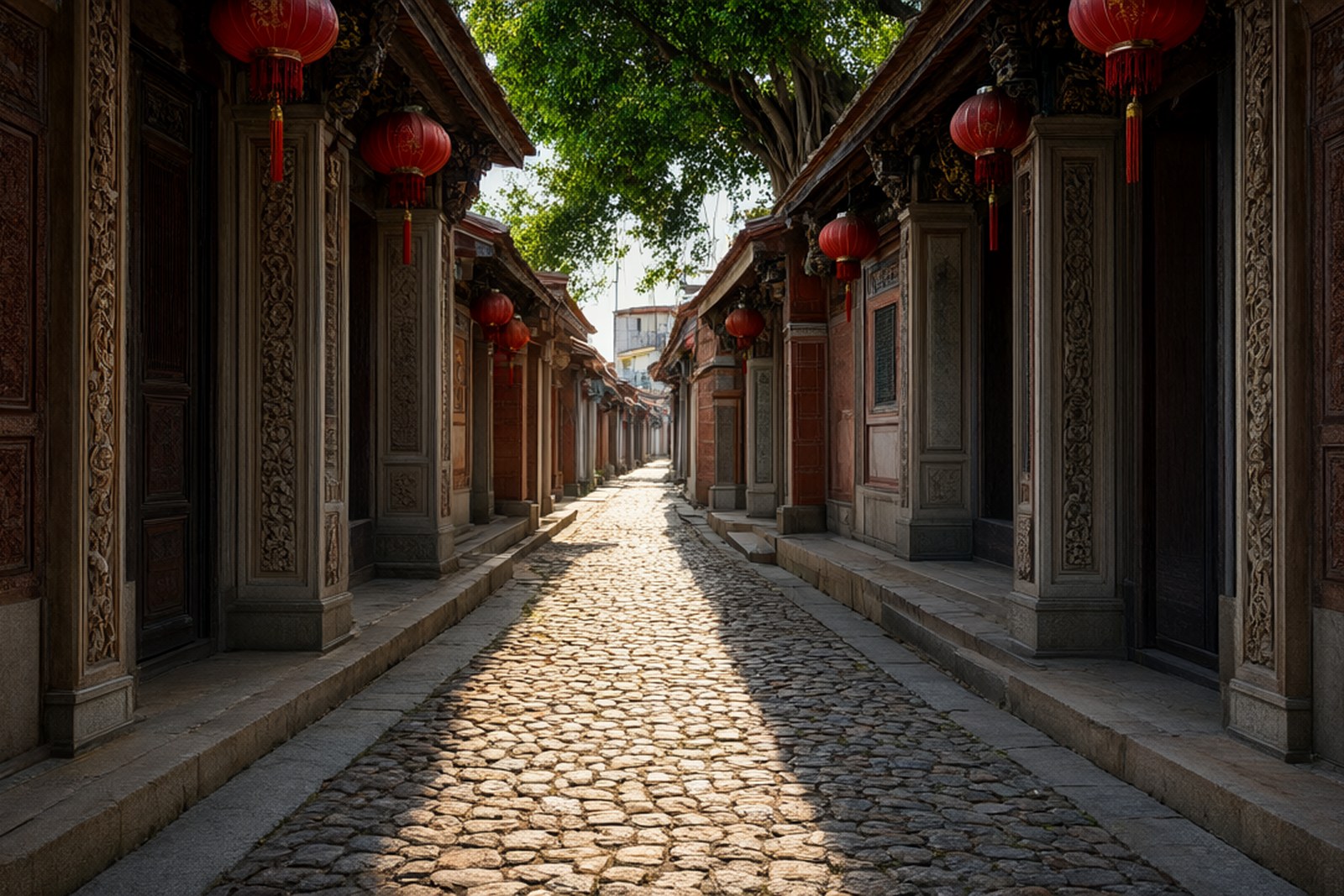
The plums are the reason people come in January rather than in June, and the phenomenon is genuine and measurable. 梅岭 means Plum Ridge and the name is usually credited to 梅鋗 Méi Juān, a general of the 越 Yuè royal line who held this ground after the fall of 楚 Chǔ to the Qin, built a stockade on the ridge, planted plum trees over it and, the account says, waited his moment for more than thirty years before rising at the end of the Qin and being enfeoffed as a marquis of a hundred thousand households. Because the two sides of the ridge have quite different climates, the trees on the south-facing slopes blossom before those on the north side, and the local formula for it is 南枝花落,北枝始开 nán zhī huā luò, běi zhī shǐ kāi – the southern branches have finished falling before the northern ones begin to open – which stretches the flowering of the whole ridge over about four months and gives the early-spring visitor the experience the slogans describe as 一脚踏两省、八面梅花香 yī jiǎo tà liǎng shěng, bā miàn méi huā xiāng, one foot in each province and plum blossom scent on all eight sides. The plum tradition here is held to be distinguished by three qualities, 盛、奇、雅 shèng, qí, yǎ – abundance, strangeness and elegance – and more than 200 poems and over a hundred stories about the blossom are recorded at the pass, which is why 大余 on the other side calls itself the 梅花诗国 méi huā shī guó, the country of plum poetry. The lane at the foot of the ridge is the other half of the story. 珠玑巷 became a commercial town and the staging post for southward migration as soon as the road opened in 716, and it has been known as 广东第一巷 Guǎng dōng dì yī xiàng, Guangdong’s first lane, ever since. The name, according to the 直隶南雄州志 zhí lì nán xióng zhōu zhì, goes back to 张昌 Zhāng Chāng in the Tang, a descendant of 张九龄 whose family settled here in a house called 孝义门 xiào yì mén, the gate of filial piety and righteousness, and whose household was celebrated for seven generations living together undivided – 天下第一家 tiān xià dì yī jiā, the first family under heaven – for which the court is said to have sent a string of rare 珠玑绦环 zhū jī tāo huán, pearls and jade ornaments, as a mark of honour. The lane was called 敬宗巷 jìng zōng xiàng until the taboo on the posthumous name of emperor 唐敬宗 Táng Jìng zōng forced a change, and the honour became the name.
What the lane is actually famous for happened in the 南宋 Nán Sòng. In the first year of 绍兴 Shào xīng, 1131, after an earthquake and a famine, 33 surnames and 97 households – well over a thousand people – led by the tribute student 罗贵 Luó Guì, petitioned the authorities for permission to move south, and went down in company to 蓢底 in 冈州 Gāng zhōu, which is 良溪 Liáng xī in today’s 新会 Xīn huì, surviving a flight through 荔枝山 in 连州 and a wrecking of their rafts in the 南海 Nán hǎi on the way; it was, the accounts stress, an officially supported civilian migration rather than a rout. Some versions of the list say 37 or 39 surnames with the same 97 households. Then in the 咸淳 Xián chún years, 1265 to 1274, came what the tradition calls the affair of 胡妃 Hú fēi, consort Hu: a consort of emperor 宋度宗 Sòng Dù zōng was framed by the chancellor 贾似道 Jiǎ Sì dào, left the palace as a nun, was rescued by a 珠玑巷 merchant named 黄贮万 Huáng Zhù wàn and taken home, and when the matter came out 贾似道 accused the people of the lane of plotting rebellion and sent troops. The population fled south on bamboo rafts down the rivers, and the consort, rather than be the cause of it, drowned herself in a well – the well is still shown, with a seven-storey stone pagoda of the 元 Yuán dynasty standing beside it, three-odd metres high and the only Yuan pagoda in Guangdong with an absolute date on it. The registers are the point of the place now, and the numbers are the reason families make the journey. 186 surnames are recorded as having left 珠玑巷 in more than 130 separate southward movements, and the genealogies of the 186 surname groups of the 珠三角 Zhū sān jiǎo all record it; some accounts give 150-odd surnames, 143, or 127 ancestral halls instead. The claim is not that everyone in the delta came from this one lane, but that an extraordinary number of families record that they did, and that the tradition has been carried orally by Cantonese communities in all eleven Greater Bay Area cities and in more than fifty countries. The literature around it is old and contemptuous of distance: 屈大均 Qū Dà jūn wrote in the 广东新语 Guǎng dōng xīn yǔ at the end of the Ming that our distinguished old families trace their native places to 珠玑巷 in 南雄; the 广东通志 Guǎng dōng tōng zhì of the Qing records that the great clans of 梁 and 霍 and others in Guangzhou all originate here; and the 九江乡志 jiǔ jiāng xiāng zhì keeps a place name in 南海 called 破排角 pò pái jiǎo – the broken raft corner – because, the story goes, the rafts of the 珠玑 migrants hit the rocks in the 九江 jiǔ jiāng bay and the people waded ashore and stayed. The 珠玑巷人南迁传说 zhū jī xiàng rén nán qiān chuán shuō, the legend of the southward migration, was inscribed in June 2021 on the national intangible cultural heritage list in the folk literature category. What is on the ground is modest and worth an hour: the cobbled lane itself, the 南门古楼 nán mén gǔ lóu, the old houses and the rebuilt ancestral halls with the surname of each family carved over the door, the 胡妃井 Hú fēi jǐng and its Yuan pagoda, the millennial banyan and the consort’s statue by 沙水湖 Shā shuǐ hú, and the stalls along the lane selling surname-origin booklets, which is the trade the place now runs on. Descendants come back by the tens of thousands – the 广东省广府人珠玑巷后裔海外联谊会 Guǎng dōng shěng Guǎng fǔ rén zhū jī xiàng hòu yì hǎi wài lián yì huì, the Cantonese overseas association of 珠玑巷 descendants, works across the Greater Bay Area – and the fifth World Cantonese Kinship Conference was held at 南雄 in 2025, with 梅岭鹅王 méi lǐng é wáng, the chilli goose of the pass, served at the welcoming lunch.
Practicalities
Tickets. Both sites charge separately: 珠玑古巷 in the region of 30 to 40 yuan with a 20 yuan concession, and the 梅关古道 about the same, with children, students and the 60 to 69 bracket at 20 yuan. 帽子峰 mào zi fēng, the ginkgo valley up the road, is a separate 50 yuan. There is no combined ticket, so two days here mean two tickets, and neither site has a booth that takes bookings in advance worth bothering with.
Opening hours. Roughly 08:00 to 17:30 at both, all year, with the lane the more forgiving of the two because it is a village street as much as a monument. The pass road is a walk rather than a circuit: allow two to three hours for the full surviving stretch and its slope, an hour and a half if you only go 来雁亭 to the gate. The best season is the middle of November to the start of December for the ginkgo at 帽子峰 and January and February for the plum blossom at the pass, which is also the season the 板鸭 bǎn yā, the pressed cured ducks, are hanging in the lanes to dry.
Getting there. Take a bus from 韶关站 Sháo guān zhàn to the 南雄 Nán xióng coach station, about 25 yuan on a rolling departure; 南雄站 nán xióng zhàn, the railway station, is a short taxi into the city at a few tens of yuan. From the city the two sites are in opposite directions and the local distance between them is real – a hired car is about 200 yuan a day and is the practical answer, because buses run to 珠玑镇 and up to the pass area but the timings do not line up, and the last stretch to the pass gate is a narrow road with no useful service.
Closing day. No weekly closing day at either. What interrupts them is weather and season: the pass road is a steep stone surface that is genuinely slippery after rain and can be closed to walkers in ice, and the plum season in January and February brings the year’s crowds to a lane and a ridge with limited parking, so a weekend in blossom time wants an early start. The lane’s own quietest months are the summer ones, when the cobbles are hot and there is no blossom and no ginkgo to pull anyone in.
flowcloud would say that the interesting thing about 珠玑巷 is not that it produced the delta’s population but that so many families agreed to say so, and that a lane which turned a string of imperial pearls into its own name and a road which a young man swore to rebuild while he was still nobody are between them a better account of how the south was settled than any list of dates – which is why the walk up the 1,015 metres from 来雁亭 to the gate is worth doing in January, in the cold, with the scent of somebody else’s ancestors’ blossom in the air.
Getting there: 珠玑巷 is at 珠玑镇 zhū jī zhèn, about twenty kilometres from 南雄市 Nán xióng shì, and the 梅关古道 climbs the ridge about thirty kilometres out of town on the Guangdong-Jiangxi boundary, with 大余 Dà yú ten kilometres beyond the gate on the Jiangxi side; the buses from 韶关站 Sháo guān zhàn to the 南雄 coach station take about an hour and cost around 25 yuan and 南雄站 nán xióng zhàn is a short taxi from the centre, but the two sites are in different directions with no useful connecting service, so a hired car at about 200 yuan a day is the practical way to do both; the nearest airfield is 韶关丹霞机场 Sháo guān dān xiá jī chǎng.