
Zhujiajiao Ancient Town: The Ming Dynasty Fangsheng Bridge, the One-Line-Sky Lanes of North Street, the Kezhi Garden and the Best-Kept Water-Town Canal Grid of Qingpu District, Shanghai
一桥卧波锁漕港,满巷烟火到桥头。Yī qiáo wò bō suǒ Cáogǎng, mǎn xiàng yānhuǒ dào qiáo tóu – One bridge lies on the water and locks the Cao River; lanes full of cooking smoke run all the way to the bridgehead.
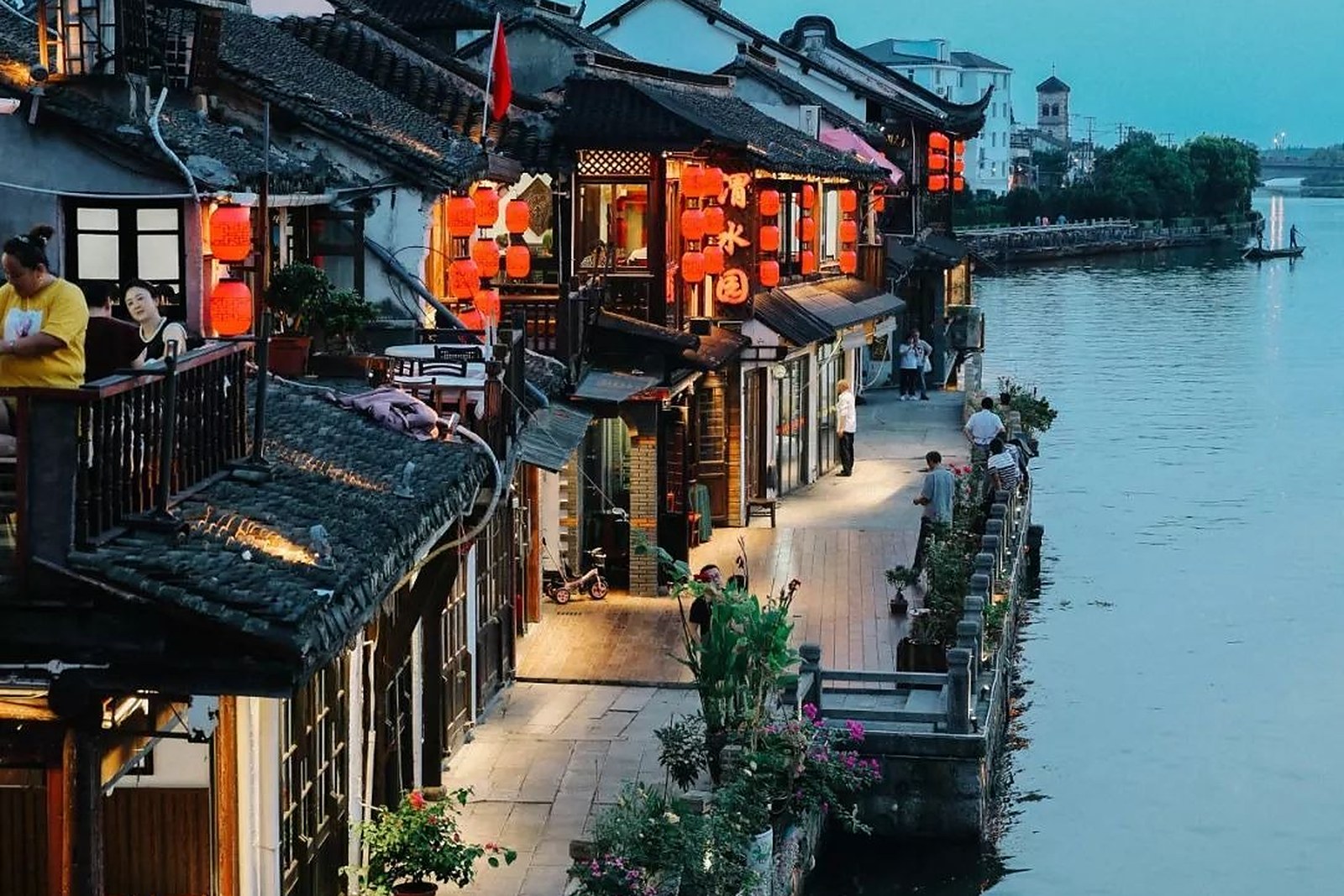
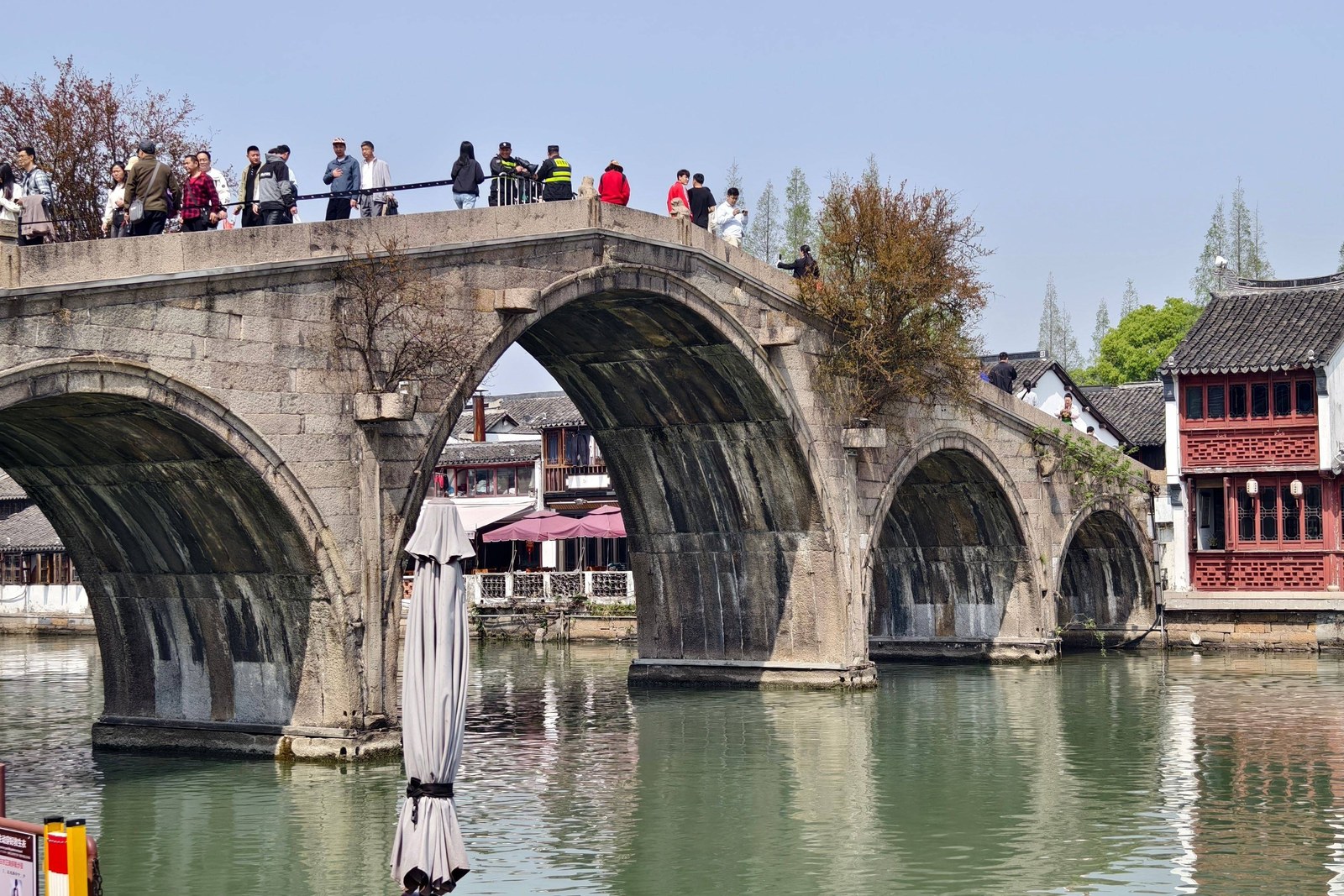
朱家角古镇 Zhūjiājiǎo Gǔzhèn Zhujiajiao Ancient Town is the best-kept of Shanghai’s water towns, in the west of 青浦区 Qīngpǔ Qū Qingpu District, Shanghai – a canal grid where 漕港河 Cáogǎng Hé the Caogang River carries ferry skiffs under the five-arched span of 放生桥 Fàngshēng Qiáo Fangsheng Bridge, the largest stone arch bridge in the Shanghai region, begun in the Ming dynasty by a monk of the local temple so that fish caught upstream might be released and not eaten. The town grew rich on rice and cloth, and the lanes still carry the trade in their stones: 北大街 Běidà Jiē North Street, the famous “one-line sky” lane so narrow that two umbrellas barely pass, fronts its glass tanks of braised pork and its vinegar counters; 课植园 Kèzhí Yuán Kezhi Garden, laid out by a local magnate in the early twentieth century around the principle “study while planting,” stacks halls, rockeries and a small theatre inside a walled precinct at the town’s quiet end. The register is livelier than its Jiangsu cousins – this is a working Shanghai weekend town, an hour from the city by metro, and it wears its crowds the way the bridge wears its footsteps.
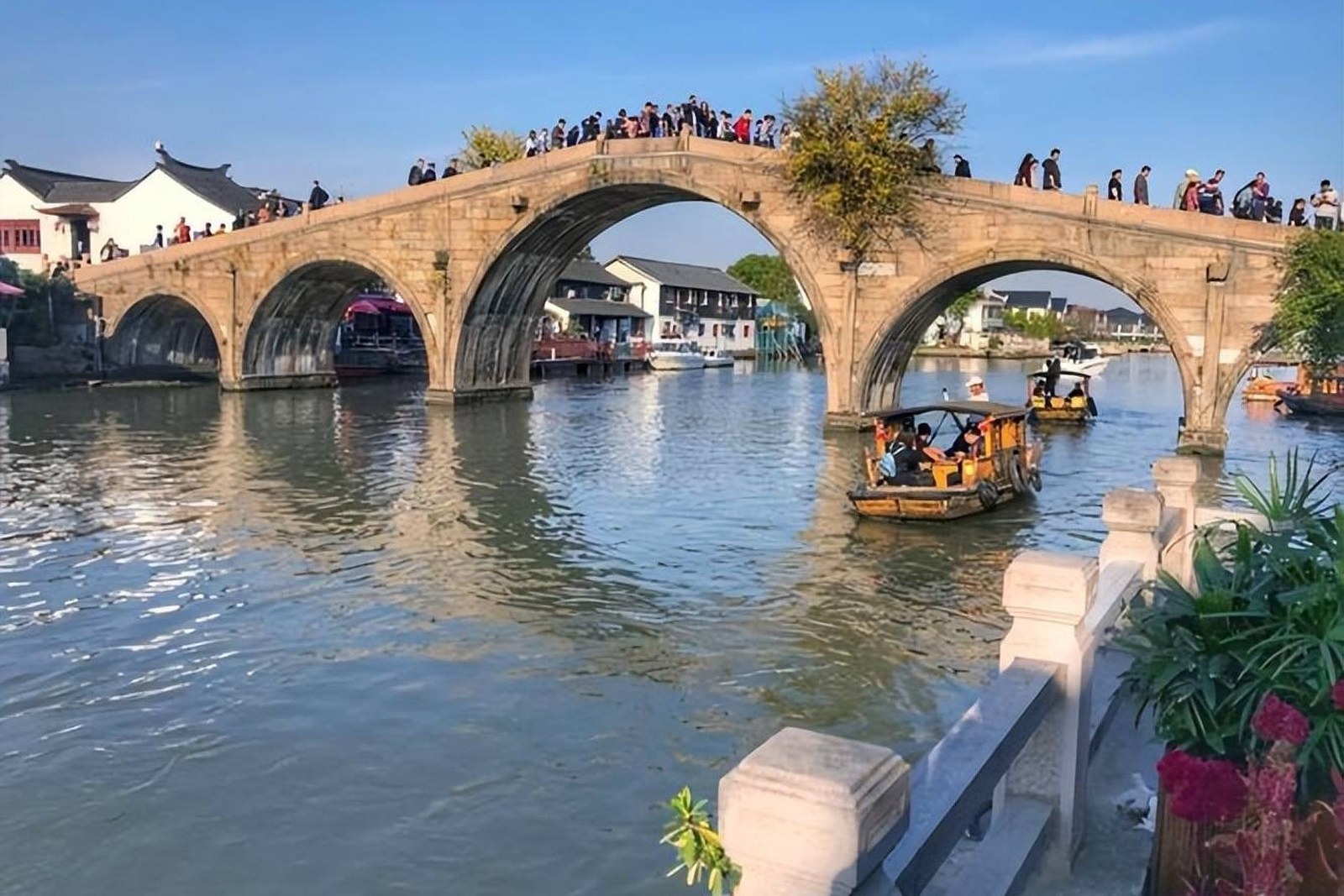
Two crowds keep the lanes full: weekend couples and families who come for the bridge photograph and the pork-tank lunch, and food pilgrims who work North Street from one counter to the next – 扎肉 zhāròu reed-bound braised pork, 阿婆粽 āpó zòng the granny’s rice dumplings, sweet wine and pressed duck. The stock answer in kind: a bridgehead old street that runs the full tourist trade, side lanes that thin out within a street of the river, and a garden at the quiet end where the noise stops at the wall (worth confirming the details for which garden buildings are open, restoration shutters appearing without notice).
Call it honestly: the postcard lane is a queue. By mid-morning Saturday, North Street moves shoulder to shoulder and the bridge crest photographs elbows as readily as rooftops (worth confirming your arrival hour if the weekend runs – the town empties remarkably before nine and after four). What the map repays is the off-axis town: the west bank lanes where washing crosses the alley overhead, the temple courts where the incense is local, and the ferry skiff ride that leaves the bridge crowd behind for the reedy reaches of the river. Against that: entry to the lanes is free, the garden tickets modestly, and a day-trip that pairs the bridge morning with a 淀山湖 Diànshānhú Dianshan Lake afternoon makes the west-of-city day feel full. The bridge at dusk, lamps coming on along the eaves, is the town’s best free theatre – book the late hour, not the early one.
Practicalities
Nearly everything else on this Qingpu list trades a different mood on the same map: choose 淀山湖 Diànshānhú Dianshan Lake for the open water, 东方绿舟 Dōngfāng Lǜzhōu Oriental Land for the lakeside camp lawns, 上海大观园 Shànghǎi Dàguānyuán the Grand View Garden for the novel’s courtyards and 金泽古镇 Jīnzé Gǔzhèn Jinze Ancient Town for the old bridges – four more doors into the same 青浦区 Qīngpǔ Qū Qingpu District. Once the day is planned, our Qingpu food map fills the eating hours.
Practicalities
Words and Names
flowcloud would say that a Zhujiajiao day is bought for the bridge and the lane – bridgehead peak to side-lane quiet in the October 2026 snapshot, all worth confirming the details – and that the honest move is to book the hours, not the brochure, because the town that queues by ten is empty at seven and the ferry skiff is the real theatre, keep the 扎肉 zhāròu lunch and the Kezhi Garden walls as the plan, and let Line 17 carry the city out. All checked October 2026.
Getting there: Metro Line 17 to 朱家角 Zhūjiājiǎo Zhujiajiao station, then a ten-minute walk south to the 放生桥 Fàngshēng Qiáo Fangsheng Bridge gates (worth confirming the details for the old-town entry policy, which keeps the lanes free while the garden sights ticket separately); the 北大街 Běidà Jiē North Street food lane starts at the bridgehead. All checked October 2026.