
The street is stone and the stone is worn into hollows, and between the stone slabs the river is visible at the end of every gap. 朱亭 Zhūtíng is a small town on the west bank of the 湘江 Xiāngjiāng in 渌口区 Lùkǒu Qū, 株洲市 Zhūzhōushì, and it has the two things that make a river town worth visiting: a stone street that has not been rebuilt, and a reason for its name that goes back eight hundred and fifty years. In 1167 the philosopher 朱熹 Zhū Xī and his friend 张栻 Zhāng Shì travelled together from 潭州 Tánzhōu — modern Changsha — down to 衡山 Héngshān, and stopped here on the river. They taught for a few days, and the local people built a pavilion on the spot; 朱亭 Zhūtíng means, roughly, Zhu’s pavilion.
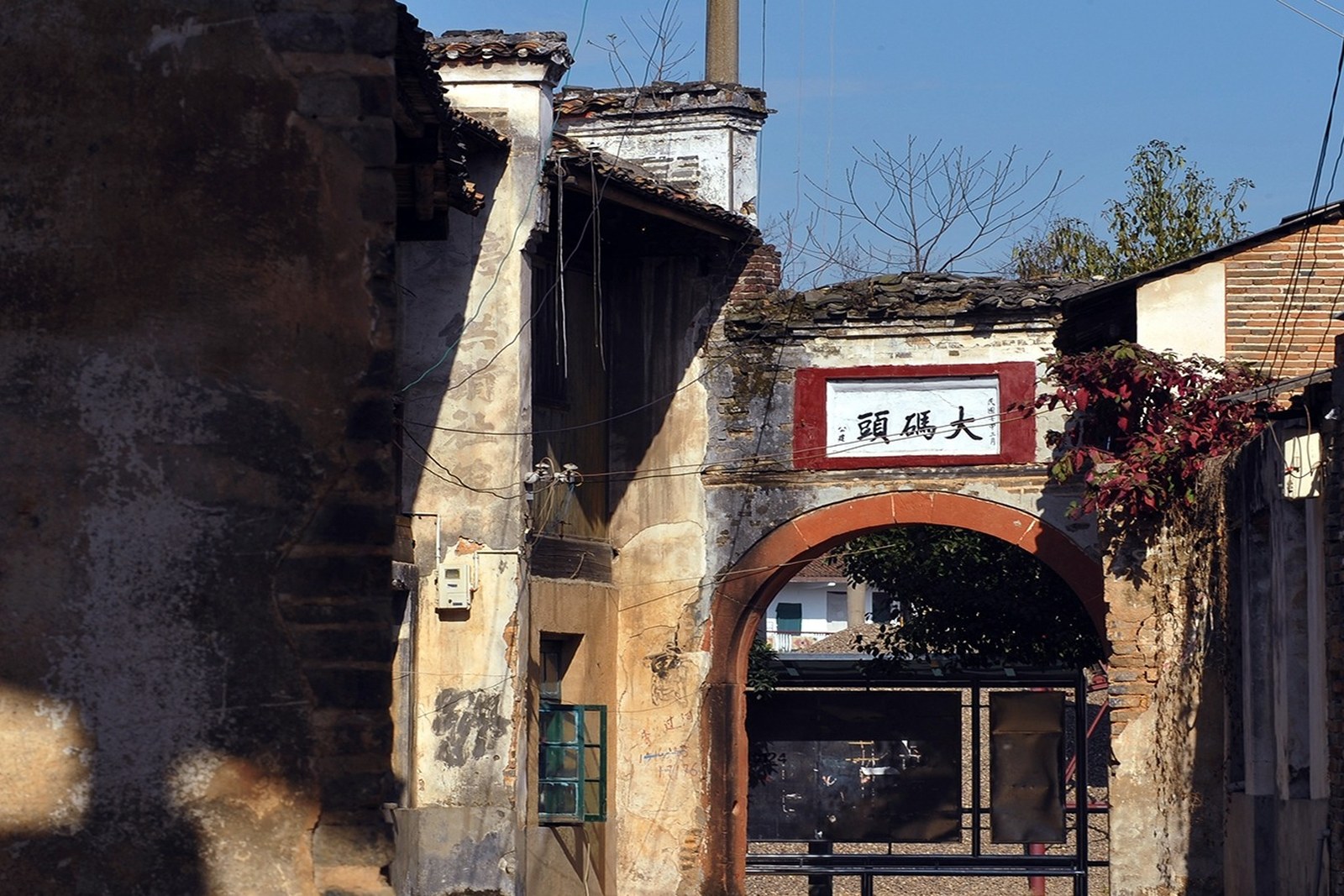
Whether the visit lasted days or an afternoon is a matter for local pride rather than evidence, but the town has been called after it ever since, and the 朱张桥 Zhūzhāng Qiáo, the Zhu-Zhang Bridge, still carries the name of both men. What survives on the ground is a stretch of 麻石街 máshí jiē, the granite-slab street, running down to the river between two-storey timber and brick houses, with shopfronts that are now mostly shuttered and a handful of teahouses that are not. The old wharf at the bottom is intact, the ferry landing is still there, and the river is wide and busy with barges — this is the main navigation channel of the Xiang, not a decorative stream.
The town was a real port for a long time. Zhuting sat on the route between Changsha and Hengyang and shipped timber, grain, pottery and tea; the street’s width and the size of the buildings at the top of it reflect money that came through here in the Qing and the Republican period. It went into decline in the twentieth century as the railways took the freight, and it has not been “restored” — which is precisely why it is worth seeing. The elements are a stone street, a wharf, a few old houses, a bridge, a very large river and not much else; the pleasure is in walking it slowly and looking at how much of the original fabric is still standing. Local efforts to have it listed as a historic town have produced signage and a small visitor facility rather than reconstruction.
Practicalities
Tickets. No admission charge. The town is a living settlement and the street is a public road.
Opening hours. Nothing here is ticketed or gated; the teahouses open early and close when the last customer leaves, and the street is walkable at any hour.
Closing day. Not applicable — no closing day, because there is nothing to close.
Getting there. About 40 kilometres and an hour by car from 株洲 Zhūzhōu city, or about 30 minutes from 渌口区 Lùkǒu Qū. Buses run from Zhuzhou’s southern bus station to 朱亭镇 Zhūtíng Zhèn; by car take the riverside road, which is slow but follows the water. There is no station of its own, though the rail line to 衡阳 Héngyáng passes close by.
What People Get Wrong
They expect a restored ancient town with lanterns, cafés and a ticket office — which is what most Chinese historic towns have become — and find a slightly shabby working street instead, and leave disappointed. The right way to come is with an interest in how a river port actually ages, and with an hour to spend sitting in one of the teahouses watching the barges.
Getting there
By car from 株洲 Zhūzhōu for a half day, or as a stop on the riverside road between Zhuzhou and 衡阳 Héngyáng. It combines with 醴陵 Lǐlíng and its porcelain valley half an hour east if you want a day of contrasts, and with the 湘江风光带 Xiāngjiāng Fēngguāngdài back in the city for a late-afternoon walk.
flowcloud would say that a town named after two philosophers who stopped for a few days on their way somewhere else, and which has kept the name for eight hundred and fifty years without building very much, has understood the value of not being interesting.
Getting there: 朱亭古镇 (Zhūtíng Gǔzhèn), 渌口区 (Lùkǒu Qū), 株洲市 (Zhūzhōushì), 湖南 (Húnán). Free, open at all hours, no closing day. About an hour and 40 km by car from 株洲 (Zhūzhōu), or a bus from the southern bus station. Walk the 麻石街 (máshí jiē) down to the 湘江 (Xiāngjiāng) wharf and have tea in one of the surviving shops.