
There is a hillside in central 湖南 Húnán where the water seems to walk down the mountain in steps. Farmers in 新化 Xīnhuà county have been carving the slopes of 紫鹊界 Zǐquèjiè into rice terraces for something like two thousand years, and the result is a staircase of water and green that runs from the valley floor almost to the ridgeline. On a misty morning it looks less like farmland than like something the mountains agreed to.
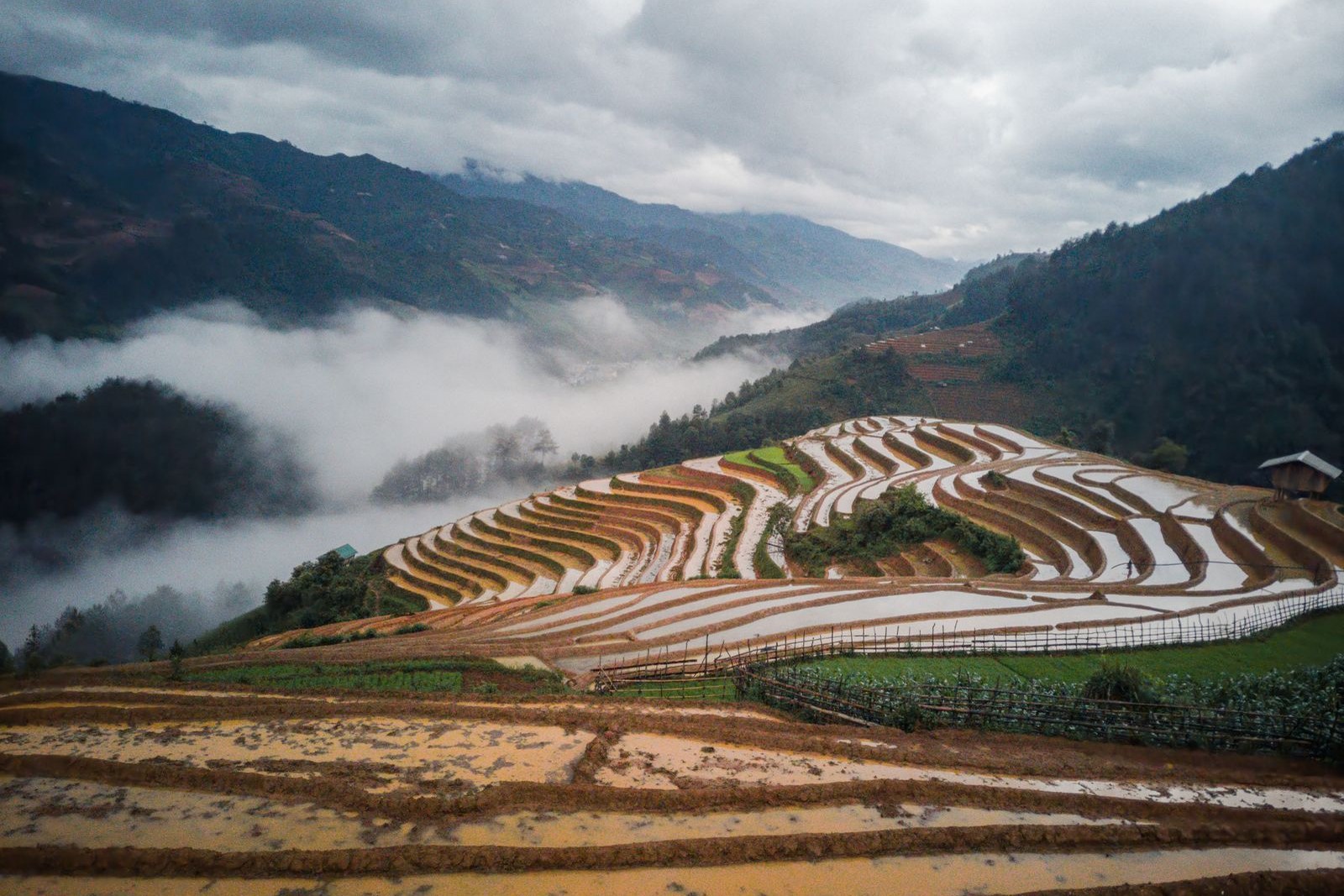
紫鹊界梯田 Zǐquèjiè tītián — the Ziquejie Terraces — are often mentioned alongside the more famous terraces of 龙脊 Lóngjǐ in Guangxi and 元阳 Yuányáng in Yunnan, and connoisseurs will argue that these are the most beautiful of the three. What sets them apart is not just their scale but the way they are fed: the whole system is irrigated by natural springs and gravity, with a web of channels cut into the hillside, and it has worked without pumps or reservoirs for generations.
The Engineering of Water
The genius of Ziquejie is that it asks almost nothing of machinery. Rain soaks into the forested upper slopes, emerges as countless small springs, and is carried from one paddy down to the next by channels cut along the contours. Every terrace is both a field and a reservoir for the one below it, so the water is used over and over on its way down the mountain.
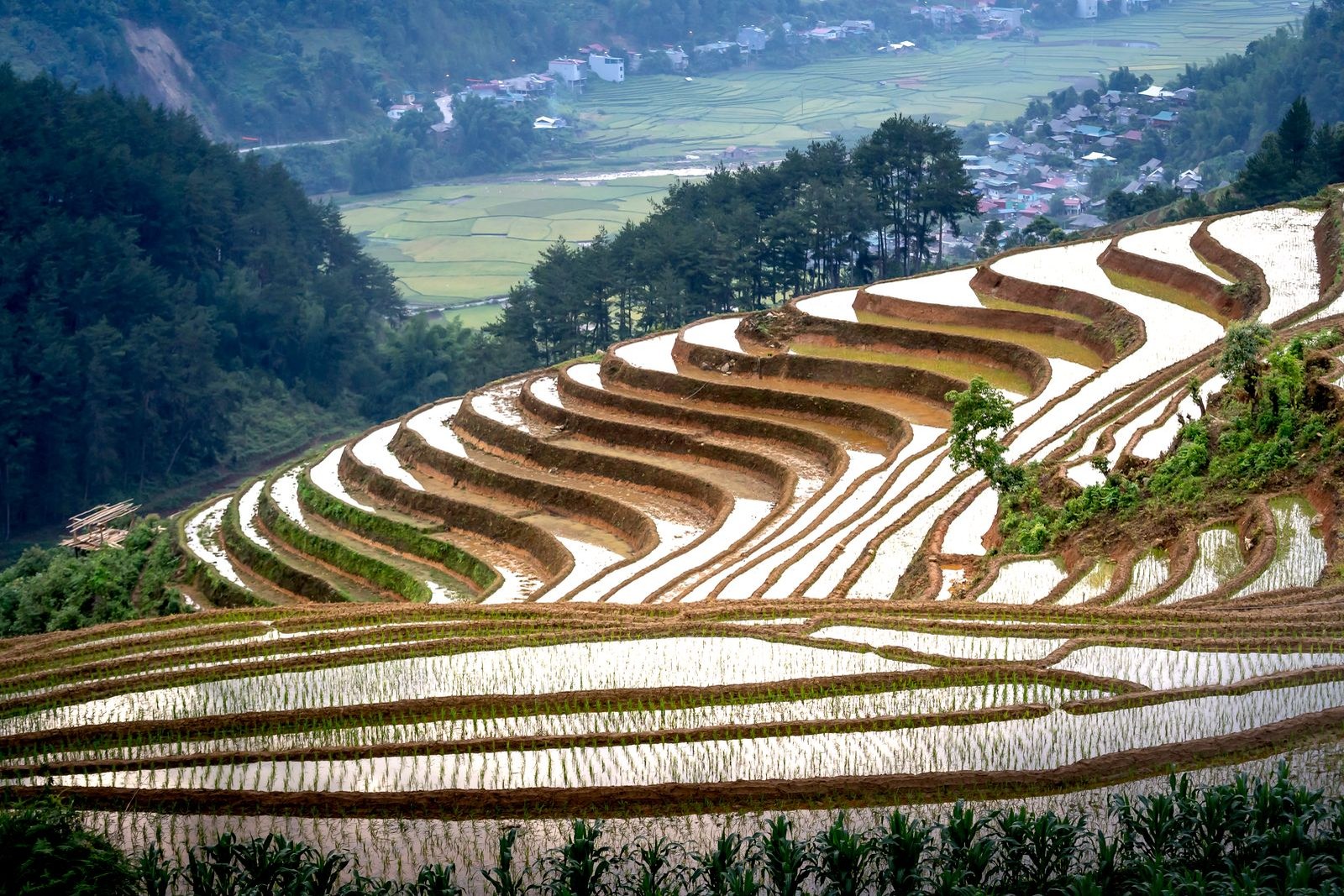
This is why the terraces look the way they do: each level is a shallow sheet of water held by an earth bund, and in spring, when the paddies are flooded and unplanted, the whole hillside turns into a giant mirror broken into hundreds of pieces. Farmers will tell you the system is fragile — a careless cut in a channel can starve a whole tier of fields — and that it only works because everyone above and below cooperates.
Through the Seasons
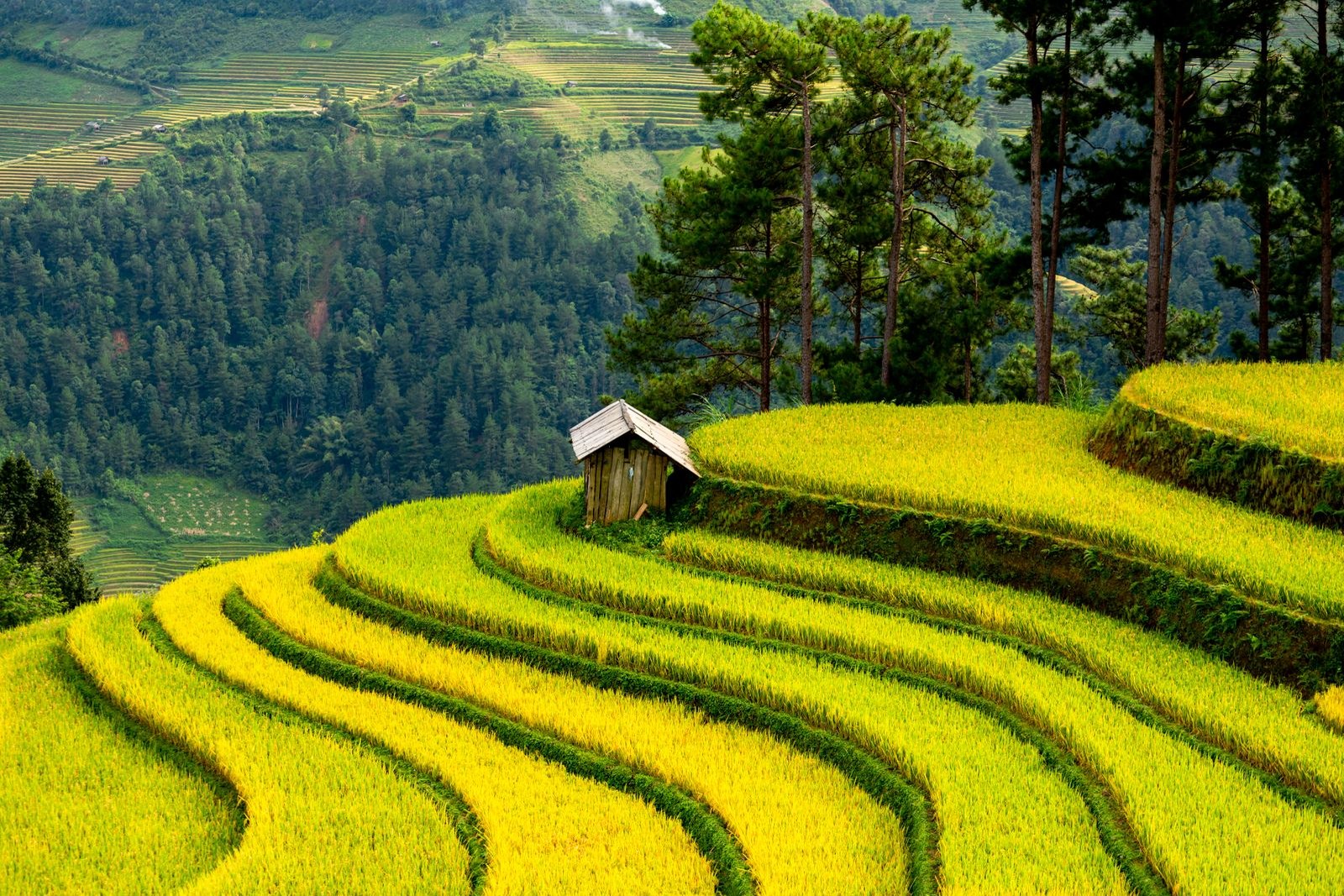
The terraces change character completely with the farming year. In late spring and early summer the paddies are flooded and silver, reflecting the sky. Through summer the rice grows and the hillside turns a deep, layered green. By autumn the terraces are gold with ripening rice, and the harvest brings the hillsides alive with people and machines. In winter the fields are bare and brown, and on the rare occasions it snows, the lines of the terraces stand out in white.
The villages among the terraces are 苗 Miáo and 瑶 Yáo communities, and their wooden houses and drum towers sit tucked between the fields. The best viewpoints are signposted along the roads that loop through the scenic area, and there are guesthouses in the villages for anyone who wants to catch the light at dawn.
Practicalities
Tickets: There is an entrance ticket for the 紫鹊界 Zǐquèjiè scenic area, which covers the main viewpoints and the roads through the terraces; tickets are modest and can be bought on arrival, though it is worth checking ahead in peak season. Opening hours: The area is effectively open all day, since it is working farmland as well as a scenic site, but the ticket checkpoints keep normal daytime hours, and viewpoints are best visited from early morning to late afternoon. Closing day: There is no regular closing day; the terraces are farmed year-round, though some access roads can be affected by heavy rain or snow in winter.
Getting there: 紫鹊界梯田 Zǐquèjiè tītián is in 新化 Xīnhuà county, in central 湖南 Húnán, west of 长沙 Chángshā. The nearest rail access is to 新化 Xīnhuà station on the high-speed line, from where it is a drive up into the hills; many visitors come by car or on an organised tour from 长沙 Chángshā or 娄底 Lóudǐ. Allow a full day, and stay overnight in one of the village guesthouses if you want the dawn light over the water. The terraces are at their most photogenic when the paddies are flooded in late spring and when the rice ripens in autumn. Flowcloud would say that Ziquejie is the rare place where the farming is the wonder — no monument, no temple, just a hillside that people and water have been arranging together for two thousand years. Come at dawn in the flooding season, and watch the mountain turn to glass.