
Zuibaichi Park: The Classical Garden of the Drunken White Pool, One of Shanghai’s Five Great Classical Gardens, Grown from the Song-Era Guyang Garden around a Lotus Pond of Corridor Bridges, Ancient Ginkgos and Fan-Painted Pavilions beside Zuibaichi Station in Songjiang District, Shanghai
荷风送香穿曲廊,古杏影里醉白堂。Hé fēng sòng xiāng chuān qū láng, gǔ xìng yǐng lǐ Zuìbái Táng – Lotus wind carries scent through the winding corridors; in the shadow of ancient ginkgos stands the Hall of the Drunken White.
醉白池 Zuìbái Chí Zuibaichi Park is not a park with an old corner attached — it is, plainly put, one of 上海五大古典园林 Shànghǎi wǔ dà gǔdiǎn yuánlín the five great classical gardens of Shanghai, and the southernmost of them: its story begins in the Song dynasty with 谷阳园 Gǔyáng Yuán Guyang Garden, a scholar’s garden on this site more than nine hundred years ago, and matured in the Qing dynasty when the painter-official 顾大申 Gù Dàshēn Gu Dashin rebuilt it around his admiration for the Tang poet 白居易 Bái Jūyì Bai Letian, whose drinking songs gave the garden its name — the pool at which one gets drunk on the poet’s whiteness. Today the garden folds its lotus pond, rock banks, 廊桥 lángqiáo corridor bridges and hardwood halls inside the ordinary green of a district park, so that a morning walk passes from children’s playgrounds into carved Qing courtyards without announcement. What you actually visit is a working city park with a Song pedigree and a Qing heart.
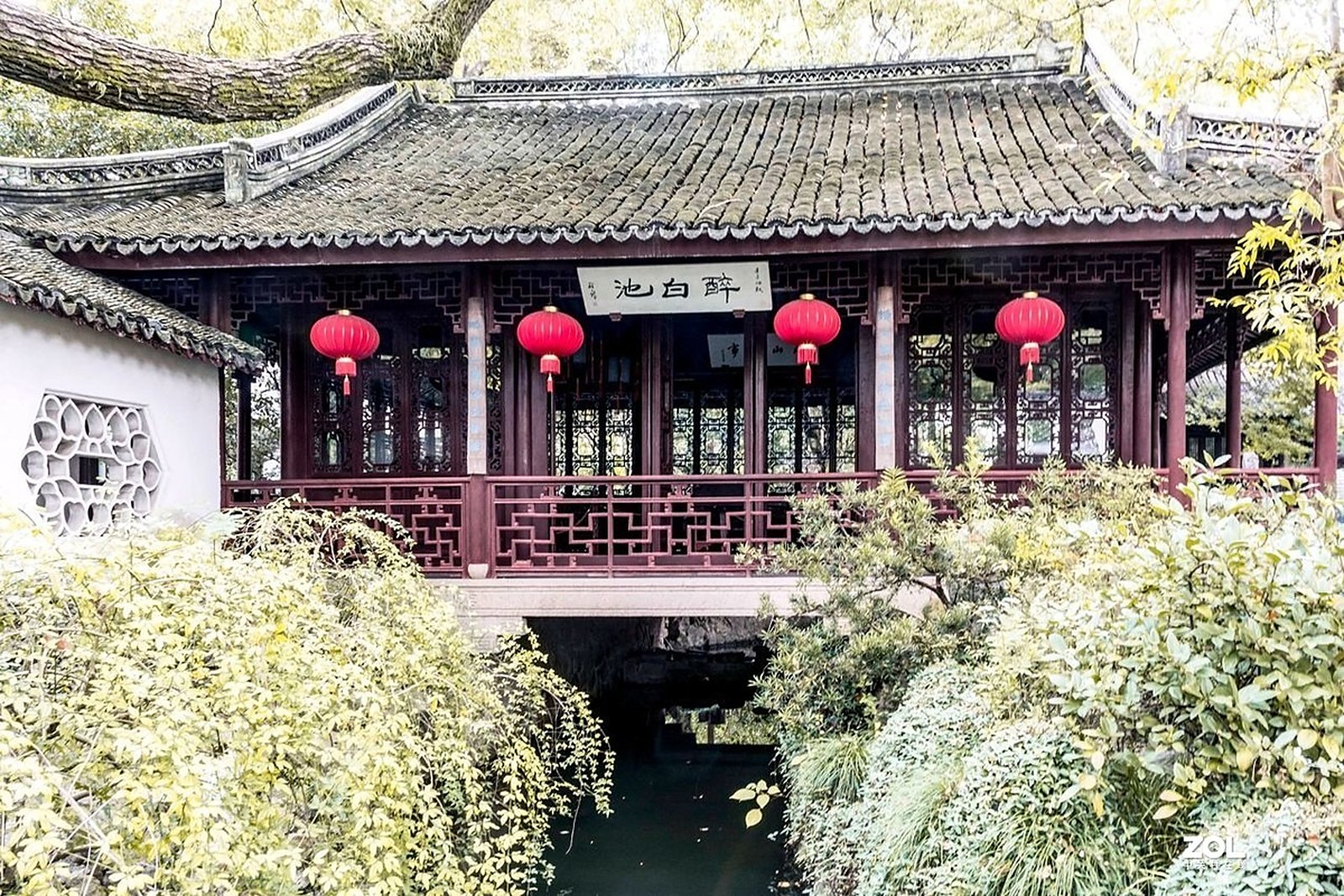
Call it honestly: the inner classical garden keeps a modest entry ticket while the outer park is nearly free to wander (worth confirming the details for current ticket prices, calligraphy-exhibition openings and lotus-season arrangements before you go), and the journey is the easiest on this Songjiang list — 醉白池站 Zuìbáichí Zhàn Zuibaichi station on Metro Line 9 sets you down almost at the gate, the train running straight from central Shanghai under an hour. The honest warning is the calendar: the garden’s famous show is summer, when 荷花池 héhuā Chí the lotus pond closes over with leaves and pink cups, and late autumn, when the ancient 银杏 yínxìng ginkgos drop their gold across the courtyards; in between it is a quiet, leafy, honest park. Weekday mornings belong to calligraphers practising with water brushes on the paving. Give the garden two hours, half a day with the old town of Songjiang next door.
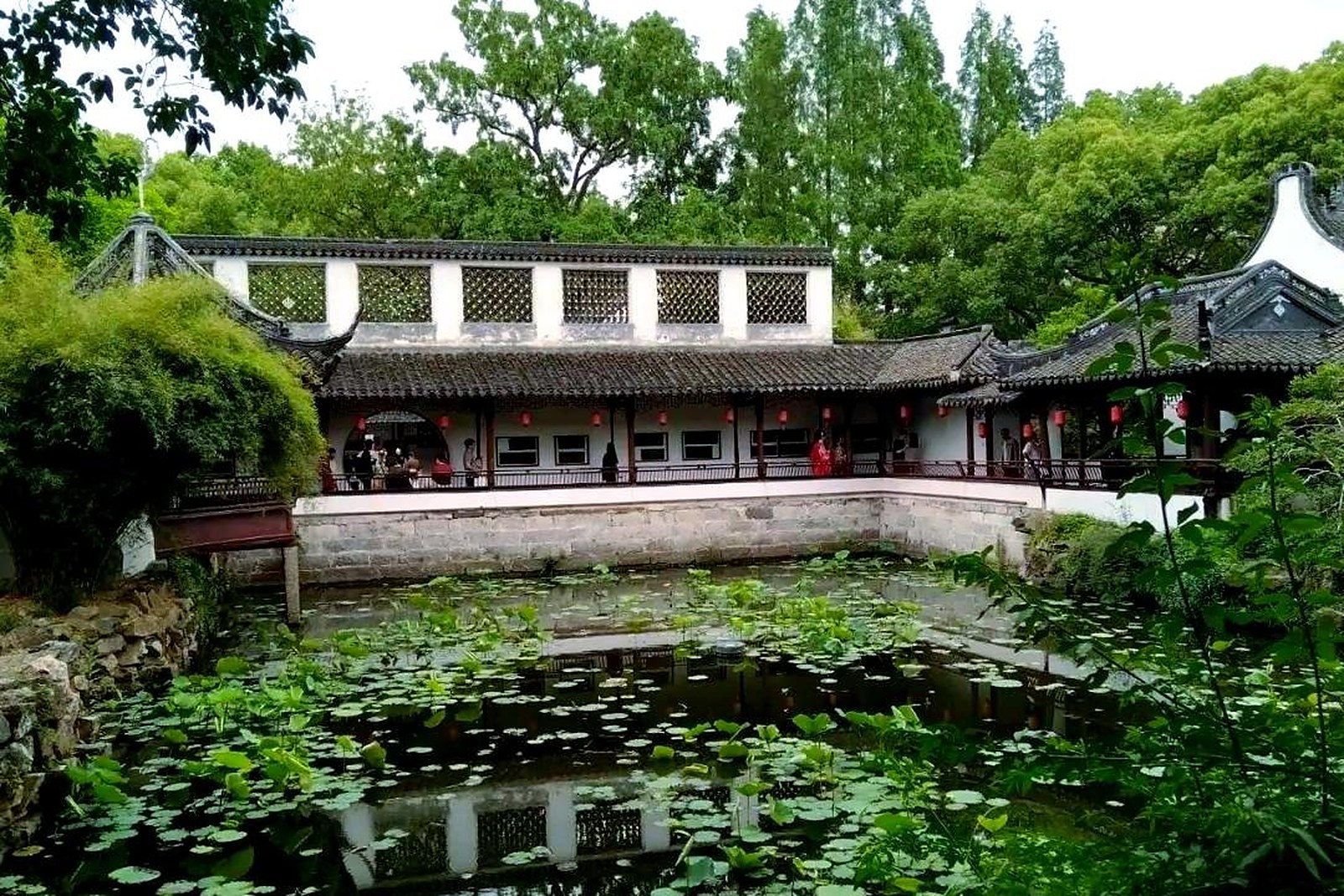
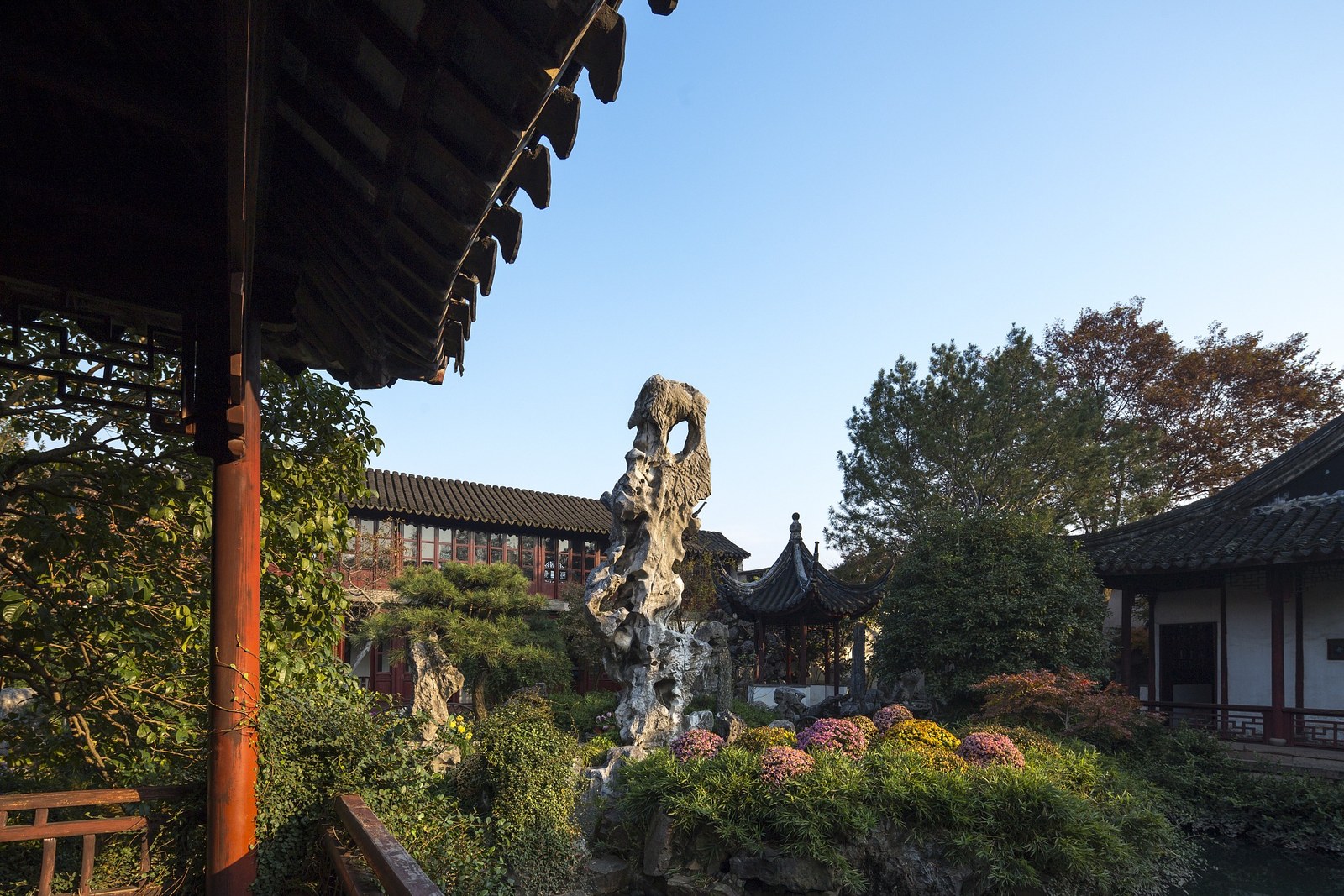
The honest star is the lotus court at the garden’s heart — the pond where 曲廊 qūláng winding corridors cross on covered bridges, fan-shaped windows frame the water like mounted paintings, and every July the leaves stack themselves into a low green roof over the pink cups, the classical view the garden’s Qing owners composed and that the lotuses still perform. What gets oversold is the name: visitors arrive expecting a famous “drunkard’s pool” of story and statue, but the pool is modest and the poetry is in the framing — the garden’s real treasure is the assembly of 古木 gǔmù ancient trees, camphors, elms and the great ginkgos said to be centuries old, whose shade decides the temperature of every courtyard (worth confirming the details for which halls and painting-and-calligraphy exhibitions are open on your day before you plan around them). What repays the effort is the carved 醉白堂 Zuìbái Táng Zuibai Hall itself, its lattice, plaques and scholar’s furniture intact in a working park. Walk the corridor first, then sit facing the water. Come for the layering of the place: corridor, then tree, then pool.
The self-aware postscript: I was copying characters with a water brush on the courtyard slabs one September morning when an old regular — his bucket of river water fading behind him — volunteered the local view. “City people ask which dynasty planted the lotus,” he said, watching his character dry to nothing, “the lotus takes care of itself; what we keep is the shade — those ginkgos were old when the railway came, and whatever the ticket says, the shadow on this stone is free”. That is the visit in miniature. From the corridor bridge at noon, looking down the length of the pond past fan windows and carved lintels to the gold of the ginkgos beginning, the garden holds its whole argument in one frame — nine hundred years of scholarship folded inside an ordinary Sunday park. 醉白池 Zuìbái Chí suits whoever treats it as a genuine classical garden of corridors, halls and ancient trees first and a city park’s greenery second, and disappoints anyone expecting ticketed theatre, light shows and orchestrated spectacles. The rest of this Songjiang list circles it: the tower lawns of 方塔园 Fāngtǎ Yuán Fangta Garden lie north in the old town, the prehistoric lake of 广富林文化遗址 Guǎngfùlín Wénhuà Yízhǐ Guangfulin Relics Park and the bamboo slopes of 佘山 Shèshān Sheshan Hill wait further north, and the red brick of 泰晤士小镇 Tàiwùshì Xiǎozhèn Thames Town sits out in the new city — all inside the same 松江区 Sōngjiāng Qū Songjiang District whose oldest shade this garden keeps.
Practicalities
- Rating: ★★★★☆ — one of Shanghai’s five great classical gardens, a Song-rooted, Qing-finished garden of corridor bridges, lotus pond and centuries-old ginkgos a short walk from its own metro station; walk the corridor, then sit facing the water.
- Tickets: Low-cost entry to the inner classical garden; outer park nearly free (worth confirming the details for current prices and exhibition openings).
- Address: 醉白池 Zuìbái Chí, 人民南路 Rénmín Nánlù South Renmin Road, 松江区 Sōngjiāng Qū Songjiang District, Shanghai — at the door of 醉白池站 Zuìbáichí Zhàn Zuibaichi station on Metro Line 9.
- Time needed: Two hours for the garden; half a day combined with Songjiang Old Town and Fangta Garden.
Words and Names
醉白池 Zuìbái Chí Zuibaichi Park, the classical garden of the Drunken White Pool · 上海五大古典园林 Shànghǎi wǔ dà gǔdiǎn yuánlín the five great classical gardens of Shanghai · 谷阳园 Gǔyáng Yuán Guyang Garden, its Song-dynasty predecessor · 白居易 Bái Jūyì Bai Letian, the Tang poet behind the name · 顾大申 Gù Dàshēn Gu Dashin, the Qing painter who rebuilt it · 醉白堂 Zuìbái Táng Zuibai Hall · 荷花池 héhuā Chí the lotus pond · 廊桥 lángqiáo corridor bridge · 古木 gǔmù the ancient trees, ginkgo and camphor · 银杏 yínxìng ginkgo · 醉白池站 Zuìbáichí Zhàn Zuibaichi station on Metro Line 9 · 松江区 Sōngjiāng Qū Songjiang District
flowcloud would say that 醉白池 Zuìbái Chí is the classical garden that never stopped being a neighbourhood park — one of 上海五大古典园林 Shànghǎi wǔ dà gǔdiǎn yuánlín the five great classical gardens of Shanghai, grown on this 松江区 Sōngjiāng Qū Songjiang District ground since 谷阳园 Gǔyáng Yuán Guyang Garden planted it in the Song, refashioned in the Qing by 顾大申 Gù Dàshēn Gu Dashin around his love of 白居易 Bái Jūyì Bai Letian, and kept ever since as a lotus pond, 廊桥 lángqiáo corridor bridges, the carved 醉白堂 Zuìbái Táng Zuibai Hall and 古木 gǔmù ancient ginkgos and camphors that decide the temperature of every courtyard (worth confirming the details for ticket prices and lotus-season and ginkgo timings before you go) — and that the honest move is a weekday morning straight off 醉白池站 Zuìbáichí Zhàn Zuibaichi station on Metro Line 9, because the famous-pool expectation is the poster half and the water-brush calligraphy drying on the slabs, the fan windows over pink cups and the gold dropping through the ginkgos are the real half, and the garden repays whoever sits down and lets the shade keep time. All checked October 2026.
Getting there: Metro Line 9 to 醉白池 Zuìbáichí Zuibaichi station, whose exit sits closest of any Shanghai garden to its namesake gate (worth confirming the details for lotus-season hours, which extend in summer); the old town’s food streets are a short walk north. All checked October 2026.